Dog Behavior Training That Sticks: Read the Signals, Skip the Guesswork
Your dog isn’t giving you attitude. He’s giving you information, and most owners never learn to read it until the barking, the leash-lunging, or the couch-eating gets out of hand. Dog behavior training isn’t about dominance or quick fixes you saw in a video. It’s about understanding why your dog does what he does and building habits that actually stick.
Key Takeaways (the short version)
- Behavior problems are almost always communication problems, not defiance or spite.
- Consistency beats intensity: five short daily sessions work better than one long weekend cram.
- Positive reinforcement builds trust faster than punishment, and the science backs that up.
- Grooming time doubles as training time if you use it to build handling tolerance.
- Most home training plateaus come from timing errors, not from a stubborn dog.
Why Does My Dog Keep Doing That? (Reading the Real Cause)
Your dog isn’t broken, and he isn’t plotting against you. Most “bad” behavior is a completely normal dog behavior showing up in the wrong place at the wrong time: digging, barking, chewing, jumping. The dog isn’t wrong. The context is.
Boredom and under-exercise cause more chaos than owners want to admit. A dog with pent-up energy and nothing to do will find his own entertainment, and you probably won’t love his choices. Fear does the same thing from a different angle: a scared dog barks, lunges, or shuts down because he’s trying to make something scary go away, not because he’s “acting out.”
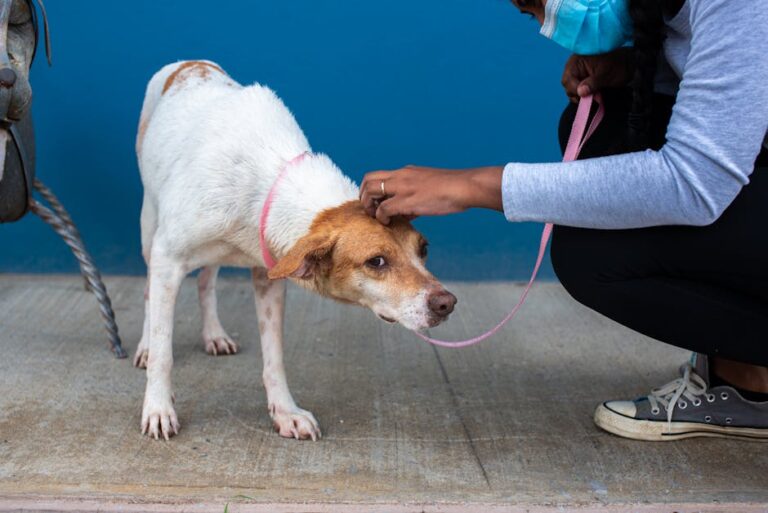
Here’s the part most people skip: watch the body language before the blowup, not after. A tucked tail, whale eye (that sideways glance showing white), a lip lick, or a sudden stillness are your dog telling you he’s uncomfortable, well before he barks or snaps. Catch those signals early and you can redirect before things escalate. Miss them repeatedly and you teach your dog that the only way to get your attention is to go big.
One more thing worth saying plainly: rule out pain first. A dog who suddenly refuses stairs, snaps during grooming, or stops responding to cues he used to know cold might be hurting, not being stubborn. A vet visit is cheap compared to months spent “training” a medical problem.
The Core Method: Positive Reinforcement That Actually Works
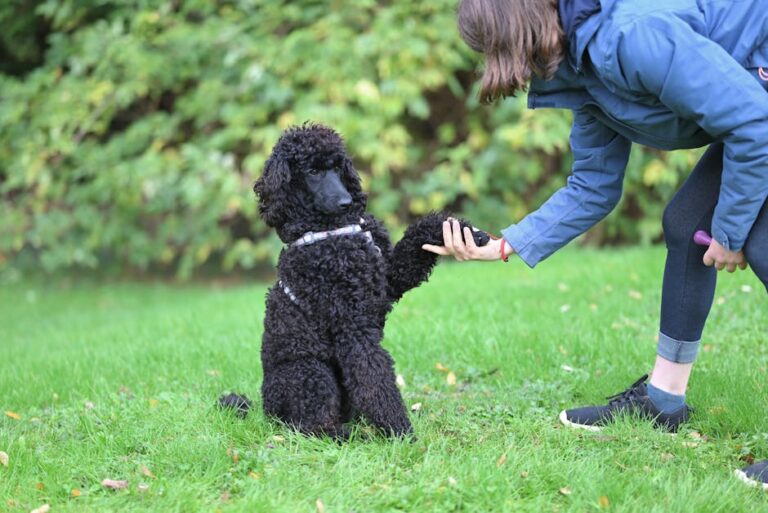
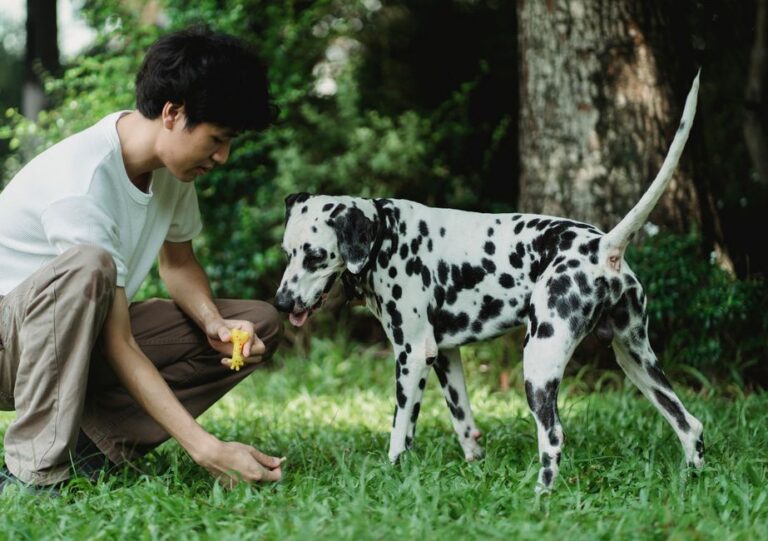
Positive reinforcement works because it tells your dog exactly what earns good things, and dogs repeat what pays off. Mark the instant he does the right thing with a clicker or a consistent word like “yes,” then deliver the reward fast. Slow marking teaches nothing.
Timing beats treat quality every single time. A reward that lands two seconds late gets attached to whatever your dog is doing then, which might be sniffing the floor, not the sit you asked for. Nail the timing and even boring treats work. Miss it and steak won’t save you.
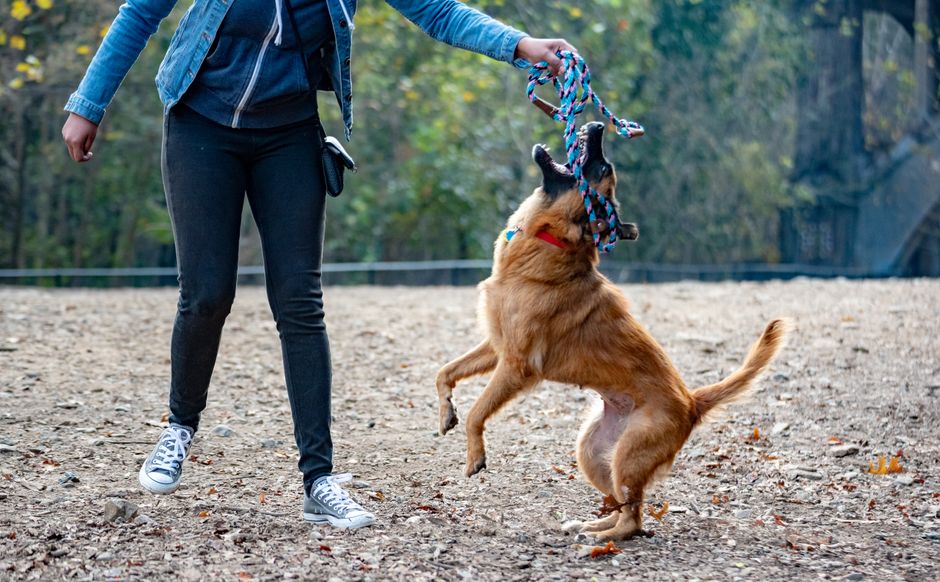
Once a behavior is reliable, start fading the treats. Swap them for praise, a quick game of tug, or a “life reward” like getting to go through the door. This isn’t about bribing your dog forever. It’s about building a habit that survives once the food isn’t there.
Skip the punishment-heavy stuff. Correction-based methods can suppress a behavior on the surface while leaving the underlying fear or confusion intact, and that combination tends to resurface later, often worse. It’s not a moral stance here so much as a practical one: it doesn’t fix the actual problem.
Building a Daily Training Routine You’ll Actually Keep
The best training routine is the one that survives a busy Tuesday. Two or three five-minute sessions a day beat a single exhausting hour, because your dog’s attention span is short and your patience has limits too. Short sessions keep both of you sharp instead of frustrated.
Train before meals, when your dog is motivated and food actually matters to him. Right after a nap or a long walk, he’s sluggish and half-checked-out, and you’ll end up blaming him for a training-window problem.
Practice known cues in new places. A “sit” that’s rock-solid in your kitchen can fall apart completely in the yard, at the park, or in a busy hallway, and that’s not defiance. That’s a dog who hasn’t generalized the skill yet. Move the training around on purpose.
Keep a running note of small wins on your phone, the same way you’d track progress through an 8-week training plan. Tracking progress turns a rough week into data instead of proof that you’re failing. Training has plateaus. That’s normal, not a red flag.
You’re not alone in figuring this out from scratch — plenty of owners have transformed their dog into the perfect companion without ever setting foot in an expensive class. Training touches nearly every dog-owning household in some form, whether that’s formal classes or plain old daily repetition at home: 94% of households report doing at least some training work with their dog.
Grooming as a Training Tool, Not Just a Chore
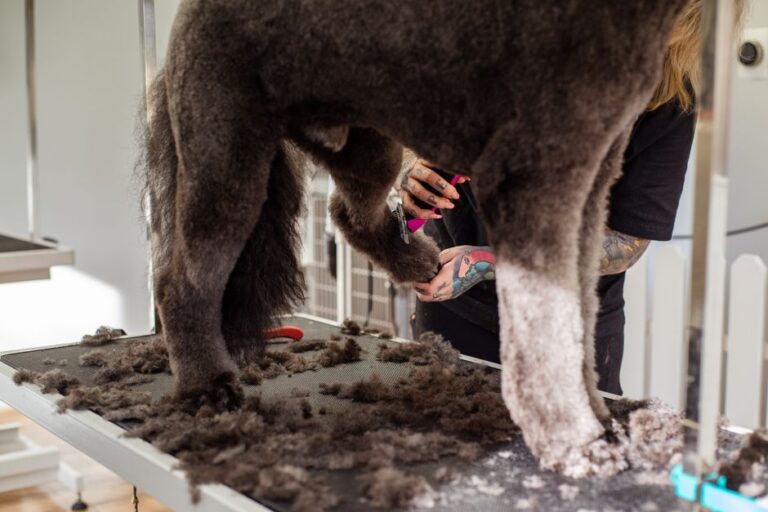
Grooming isn’t just maintenance. It’s some of the best handling practice you’ll ever get, and it builds the calm tolerance your vet and groomer will thank you for later. Every time you touch paws, ears, or a mouth without a fight, you’re banking trust for the next vet visit, nail trim, or emergency check.
Before you attempt an at-home trim for the first time, watch a few professional dog grooming videos. Good ones from certified groomers show you the actual tool angles, safe restraint holds, and where the quick sits on a nail so you’re not guessing with clippers in hand.
Pair the unpleasant stuff (nail trims, brushing out mats, ear checks) with treats from the start. A dog who learns early that grooming means snacks doesn’t turn into a dog who fights you at eight years old. This is prevention, not damage control.
Keep sessions short and frequent instead of one long ordeal. A five-minute brush-out three times a week beats a 45-minute wrestling match once a month, and it’s the frequency, not the duration, that actually lowers stress and cuts down on squirming, snapping, or shutdown.
Training Approach Comparison
Different tools solve different problems. Here’s how the main approaches stack up:
| Method | Best For | What to Watch For |
|---|---|---|
| Positive reinforcement (rewards) | Everyday obedience, puppies, anxious dogs | Requires consistency and correct timing to work |
| Clicker training | Precise skills, tricks, shaping new behaviors | Needs practice pairing the click with a reward |
| Professional trainer sessions | Aggression, reactivity, resource guarding | Costs more but prevents escalation of serious issues |
| Punishment-based correction | Rarely recommended | Can increase fear and worsen aggression over time |
When to Call In a Professional Trainer
Some problems are bigger than a training article, and there’s no shame in admitting that. Aggression, resource guarding, and severe fear need a certified trainer or a veterinary behaviorist, not a YouTube tutorial and a hopeful attitude. These are the situations where guessing wrong has real consequences.
Look for credentials that mean something, like CPDT-KA, and trainers who can clearly explain their methods as force-free. If a trainer gets vague or defensive when you ask how they handle a fearful dog, that’s your answer.
Most owners don’t think to reach for professional help even when they’re worried. Only 5% of dog guardians surveyed said they’d actually use a trainer when they had behavior concerns, while 60% said they’d ask a friend or family member instead. That gap is exactly why so many tricky behaviors, like leash reactivity, drag on for months. A few sessions with a real professional can shortcut all of that.
The Bottom Line
Dog behavior training isn’t a personality overhaul, it’s a series of small, consistent conversations between you and your dog, the same philosophy behind 7 essential dog training tips that transform problem pups into perfect pets. Show up daily, reward the behavior you want, and don’t be afraid to call a professional when things get bigger than a training article can fix.
Frequently Asked Questions
How long does it actually take to train a dog out of a bad habit?
Simple habits like jumping on guests can shift in a couple of weeks of daily practice. Deep-rooted fear or reactivity often takes months, and that’s normal, not a sign you’re doing it wrong.
Is it too late to train an older dog?
No. Older dogs often learn faster than puppies because they have longer attention spans, and knowing how a training schedule should shift with your dog’s age helps you meet them where they are. The old saying about old dogs and new tricks is just wrong.
Should I do my dog’s grooming at home or take him to a professional?
Routine brushing and simple trims are fine at home once your dog tolerates handling. Full haircuts, mat removal, or anxious dogs are better left to a professional groomer.
My dog listens at home but ignores me outside. Why?
That’s a generalization problem, not defiance. Distractions compete with your cues, so you need to practice the same commands in gradually noisier environments.
Are professional dog grooming videos actually useful for beginners?
Yes, if you pick ones from certified groomers who show tool handling and restraint techniques clearly. They’re a good preview before you try clippers or nail trims yourself for the first time.