Dog Grooming Tip Percentage and Daily Nutrition: The Numbers You Actually Need
Two questions trip up almost every dog owner: how much do you actually tip the groomer, and how much food does your dog really need every day? Neither one has a single magic number, but both have real answers once you know what drives them, the same practical mindset behind our dog care tips for beginners guide. Let’s clear up the guesswork on both fronts so you can stop Googling mid-checkout and mid-kibble-scoop.
Key Takeaways (the short version)
- A standard dog grooming tip runs 15 to 20 percent of the service total, same as a human salon.
- Tip more for mat removal, aggressive behavior handling, or last-minute holiday appointments.
- Your dog’s daily nutrition needs depend on weight, activity level, age, and whether they’re spayed or neutered.
- A nutrition calculator gives you a starting calorie target, not a final answer, always check the food label’s feeding guide too.
- Puppies, adult dogs, and senior dogs need different ratios of protein, fat, and calories, not just different amounts.
How much should you tip your dog groomer?
The standard is 15 to 20 percent of the total bill, and that number shows up across nearly every source that covers grooming etiquette. Treat it like a salon tip, because that’s basically what it is. Base it on the grooming service itself, not the add-ons.
That means when your groomer rings you up for the bath, the trim, and the nail clip, calculate the tip off that number. Skip the extras like nail polish, bandanas, or cologne spritzes when you’re doing the math. Those are upsells, not labor.
Ownership status changes the obligation, not the courtesy. If your groomer owns the shop, tipping isn’t strictly required the way it is for staff, but it’s still appreciated. Owners still put in the same hour wrestling a wiggly terrier, and a tip says you noticed.
Cash still wins. Most groomers would rather you hand over cash than add the tip to a card, since card tips sometimes get processed differently at tax time. If you’re paying by card and want to be sure your groomer actually pockets the full amount, bring a few bills for the tip separately.
When do you tip more, and when is it okay to tip less?
Tip more when the job was genuinely harder than average: heavy mats, thick-coat deshedding, or a dog that fought the whole appointment. Tip less, or skip it and speak up instead, when the groomer rushed, ignored your instructions, or hurt your dog. The tip should track the effort and quality, not just habit, and our complete guide to tipping dog groomers breaks down exactly how much more to add for each scenario.
Here’s where the higher end of that range earns its keep. A dog with months of missed brushing that shows up matted head to tail is a different job than a quick bath and trim. So is a nervous or reactive dog who needs extra patience and careful handling to get through a nail trim without a fight, the kind of scenario our no-stress grooming playbook for beginners is built to help with. Your groomer earned the extra 20 percent or more in those cases, not because the appointment was pleasant, but because it was hard.
Holiday season is its own category. The week around Thanksgiving or Christmas is packed with back-to-back appointments, and a lot of owners bump the tip or toss in a small gift as a thank-you for squeezing them in. It’s not required, but it’s a nice habit if you can swing it.
Here’s the part owners get wrong most often: your dog’s bad behavior isn’t the groomer’s fault. If your pup screamed through a nail trim or wouldn’t hold still, that’s not a reason to shortchange the tip. The groomer still did the work, often with more patience than the situation deserved.
On the flip side, don’t feel obligated to tip generously for a bad experience. If the groomer nicked your dog, rushed through the appointment, or flat-out ignored what you asked for, tipping low or skipping it is fair. Just don’t let the tip do the talking. Address the actual problem with the shop directly so it doesn’t happen again.
| Scenario | Suggested Tip |
|---|---|
| Routine bath and trim, easygoing dog | 15 to 20 percent |
| Heavy mats, deshedding, or a difficult/anxious dog | 20 to 25 percent |
| Holiday season appointment (Thanksgiving, Christmas) | 20 percent plus a small extra or gift |
| Rushed job, ignored instructions, or an accident during grooming | 10 percent or a direct conversation instead |
What nutrition does a dog need daily?
Every dog needs protein, fat, carbohydrates, vitamins, minerals, and fresh water every day, but the right balance shifts depending on age, size, and activity, one piece of the daily routines that actually work for overall dog care. There’s no single “correct” bowl for every dog. A growing puppy, a couch-loving senior, and a working adult all need the same building blocks in very different proportions.
Puppies need more protein and fat per pound than adults, full stop. Growth is expensive, metabolically speaking, and skimping here shows up later as poor development. Senior dogs usually need fewer total calories as their metabolism slows, but they still need high-quality protein to hang onto muscle mass. Cutting protein along with calories on an older dog is a common mistake.
Activity level matters just as much as age, maybe more. Two dogs of the same breed, same weight, and same age can have wildly different calorie needs if one naps most of the day and the other hikes with you every weekend. Don’t feed by breed stereotype. Feed by the actual dog in front of you.
When you’re picking a food, look for one that meets AAFCO nutritional adequacy standards for your dog’s specific life stage, not just a vague “all life stages” label slapped on the bag. Flip the bag over and actually read what it’s formulated for, and if you want more detail on recipes and special diets, our complete guide to dog nutrition covers it.
How does a nutrition for dogs calculator actually work?
A nutrition for dogs calculator takes basic inputs like weight, age, activity level, and spay/neuter status, then spits out a daily calorie target using a resting energy formula multiplied by an activity factor, the same approach our dog nutrition calculator guide walks through for everything from healthy pups to Cushing’s. It’s a starting point, not gospel. Think of it the same way you’d think of a human calorie calculator: useful for a baseline, useless for fine-tuning without real-world feedback.
Most calculators work off the same basic logic. They estimate resting energy needs first, based on weight, then apply a multiplier depending on whether your dog is a couch potato, moderately active, or basically a furry athlete. Spay and neuter status factors in too, since altered dogs often need slightly fewer calories than intact ones.
Here’s the catch nobody puts in the app description: a calculator can’t see your dog’s bloodwork. A dog with thyroid issues, kidney disease, or any other medical condition needs a vet’s input, not just a number from an online tool, which is exactly why catching health problems before they become emergencies matters as much as getting the calorie math right. Use the calculator to get in the ballpark, then let your vet correct your aim if something’s off.
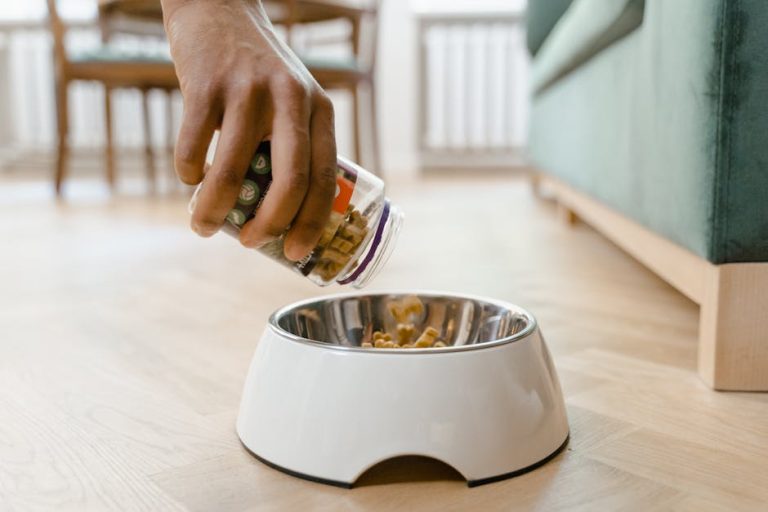
Once you’ve got a calorie number, don’t stop there. Check it against the feeding guide on your dog’s actual food bag, because that guide is based on that food’s specific calorie density, a step our guide to calculating perfect portions beyond generic feeding charts covers in more depth. A cup of one brand is not a cup of another. Skipping this step is how owners end up overfeeding a calorie-dense food while following a number meant for something leaner.
The bottom line
Tipping your groomer 15 to 20 percent and feeding your dog based on real numbers instead of guesswork are both small habits that add up to a happier, healthier dog and a groomer who’s glad to see you walk in the door, the same combination our grooming guide, from professional tipping to stopping excessive barking ties together. Skip the guesswork on both: your dog and the person handling the clippers will thank you.
Frequently Asked Questions
Do I tip on the pre-tax or post-tax total for grooming?
Tip on the service total before tax, the same rule most people use for restaurant tips. Nobody expects you to tip on the sales tax, so don’t add it to your math.
Is it rude to skip tipping the groomer entirely?
It’s not illegal, but it’s considered stingy in an industry where tips are a normal part of income. If money’s tight, a smaller tip plus a genuine thank-you and a good review still goes a long way.
Should I tip differently for a mobile groomer who comes to my house?
Yes, tip the same 15 to 20 percent baseline, and consider a bit more since mobile groomers deal with your specific setup and travel time. They’re hauling equipment to your driveway instead of working in a shop built for the job.
How many calories does my dog actually need in a day?
It depends on weight and activity, but a rough starting point is around 30 calories per pound for an average adult dog at moderate activity, then adjust up or down based on body condition and vet feedback. Use that as a rough draft, not a final answer.
Do treats count toward my dog’s daily nutrition needs?
Treats should stay under about 10 percent of total daily calories, a version of the 90-10 rule vets use for overall diet balance, and any calculator estimate needs to account for them, not just the kibble in the bowl. If you’re generous with treats, you need to be a little stingier with the actual meal.
Can I trust an online nutrition calculator over my vet?
Use the calculator as a rough guide, then confirm with your vet, especially if your dog has a health condition, is significantly overweight, or is a growing puppy. An app doesn’t know your dog’s medical history. Your vet does.