Professional Dog Grooming Techniques: The Groomer Playbook for Calmer Sessions
Groomers see it every day: a dog owner white-knuckling the clippers, a squirming pup, and a haircut that looks like it lost a fight. Professional groomers aren’t just better with scissors. They follow a system, they read the dog first, and they know exactly why their setup works. Steal their no-stress playbook and your bathtub sessions stop being a wrestling match.
Key Takeaways (the short version)
- Groomers work in a set order: assess, brush, bathe, dry, then cut, never the reverse.
- The 4 F’s (Fight, Flight, Freeze, Fidget) explain why your dog panics at the nail clippers.
- FFF stands for Fear Free grooming, a low-stress approach more salons now train for.
- A solid dog grooming kit costs less than one bad at-home haircut plus a vet visit for clipper burn.
- Reading your dog’s stress signals matters more than any fancy tool in your grooming kit.
What actually separates professional dog grooming techniques from a DIY bath?
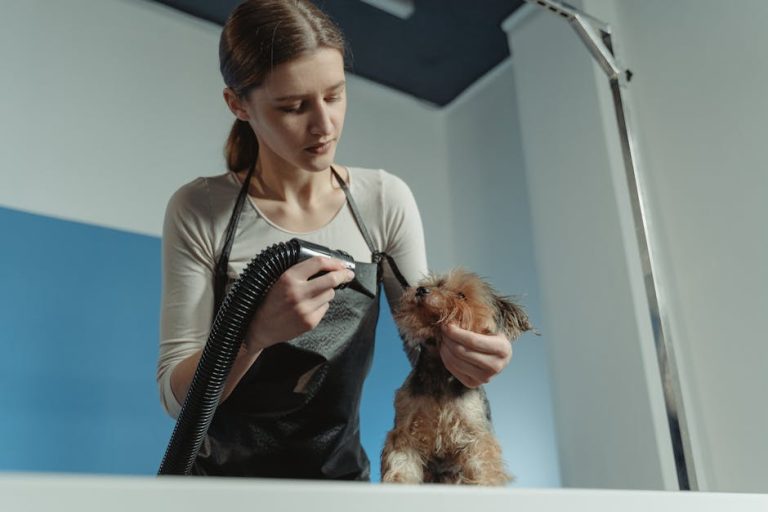
Professional groomers follow a strict order: assess the coat, brush out every mat, bathe, dry completely, then cut. Skip a step or reorder it and you end up with tighter knots, a missed undercoat, or a haircut that looks chewed off. The sequence matters more than any single tool, something we break down step by step in this guide to mastering professional dog grooming at home.
Here’s the part most owners get wrong: they bathe a matted dog first. Water tightens knots and turns a manageable tangle into a painful clump stuck to the skin. Groomers brush dry, always, before a drop of water touches the coat.
Groomers have been figuring this stuff out for a long time. Dog grooming as an actual craft goes back to somewhere between 1500 and 1600 A.D., so the “brush before bath” rule isn’t some new trend. It’s just what works.
Line brushing versus skimming
A groomer doesn’t just glide a brush over the top of the coat. They work in thin layers, starting at the skin and brushing outward, section by section, one of several professional dog grooming techniques that turn stress into success. Skim the surface and you’ll miss the undercoat mats hiding underneath, the ones that show up as a nasty surprise weeks later.
The right tool for the right coat
- Slicker brush: double coats, working through the dense undercoat.
- Pin brush: long, silky coats that tangle easily but don’t have heavy undercoat.
- Rubber curry: short coats, for loosening dead hair without irritating skin.
Bathing technique that actually protects the coat
Lukewarm water, never hot. Diluted shampoo worked in the direction hair grows, not scrubbed against it. And rinse far longer than feels necessary, because leftover soap residue is one of the most common causes of itchy, flaky skin after a bath, a detail covered in this guide to taking your dog from scruffy to salon-fresh at home.
What are the 4 F’s of dog behavior, and why should groomers care?
Fight, Flight, Freeze, and Fidget are the four ways a stressed dog reacts when it feels trapped on a grooming table. Groomers use this framework to catch trouble before it becomes a bite or a bolt. The tricky one is Freeze, because it can look like calm cooperation when it’s actually the opposite.
A frozen dog isn’t relaxed. It’s shut down, has decided struggling won’t help, and is enduring the situation rather than accepting it. That’s a welfare problem, not good behavior, and treating it like a win is exactly how dogs end up hating grooming for life.
Research on this isn’t just theory. A study looking at dog welfare before and after a professional grooming session found that even a standard, routine grooming appointment can produce measurable stress in dogs. That’s a professional setting with a trained handler. Imagine what an untrained one at home can trigger.
The fix is catching it early. Lip licking, yawning, whale eye (that half-moon of white showing in the eye) all show up before a dog escalates to actual fight or flight. A groomer who’s paying attention pauses right there. You should too.
At home, this changes what “pushing through” means. The instinct is to finish the job because you started it. Don’t. The moment you see early fidgeting, stop, let the dog reset, and come back to it. A five-minute break beats a dog that associates the whole clippers with panic.
What does FFF mean in dog grooming, and does it change how salons work?
FFF stands for Fear Free grooming here, though you’ll sometimes see it used for Face, Feet, and Fanny trims instead, a certification and philosophy built around keeping a dog’s stress as low as possible during handling. Instead of running through a checklist on a timer, Fear Free groomers let the dog’s comfort level set the pace of the appointment. It’s a real credential, and it’s worth asking about before you book, alongside other salon etiquette covered in this guide to professional tipping and stopping excessive barking.
The techniques aren’t complicated, but they take patience:
- Gradual desensitization to tools, letting a dog sniff and hear the clippers before they touch fur.
- Frequent breaks instead of one long, uninterrupted session.
- Pacing dictated by the dog’s stress signals, not the clock on the wall.
If you’ve got an anxious dog, ask straight up: “Are you Fear Free certified?” It’s a fast, concrete way to vet a salon instead of guessing based on a nice website. The whole approach borrows heavily from low-stress handling methods used in veterinary clinics, which tells you something. Vets deal with animals that have every reason to be scared, and they’ve figured out that rushing makes it worse, not better.
Same logic applies in your bathroom. Calm-first isn’t a salon luxury. It’s just correct.
What belongs in a real dog grooming kit?
A real dog grooming kit is a short list of well-made tools, not a bin full of gadgets, the kind that can transform grooming from a stressful ordeal into bonding time. The core pieces cost more upfront than a dollar-store clipper set, but they pay for themselves the first time you avoid a vet visit for clipper burn or a coat so matted it has to be shaved down, exactly the kind of outcome this complete dog grooming guide helps you sidestep.
Core tools:
- Slicker brush
- Undercoat rake or deshedding tool
- Grooming clippers with guard combs
- Nail grinder or clippers
- Styptic powder, for when a nail trim goes a little too far
Coat-specific extras:
- Mat splitter, for breeds that tangle easily
- Pin brush, for long silky coats
- Thinning shears, for finishing touches around the face and paws
Skip the bargain-bin clipper kits. Dull blades don’t cut hair, they yank it, and a dog that gets yanked by clippers once will fight you on clippers forever. That’s not a dramatic exaggeration, it’s just how dogs learn.
Money is a real factor here, and it’s worth naming honestly. Cost and access are two of the biggest reasons people fall behind on grooming at all: 92% of pet owners surveyed reported at least one barrier to keeping their pet’s grooming on track, things like income and transportation. A decent home kit is one of the most practical ways to close that gap between full salon visits, where extra add-on services like nail trims or deshedding typically start at $18 or more per service depending on where you live.
Storage tip: keep nail clippers, ear cleaner, and cotton balls together in one spot. Routine maintenance between full grooms should take five minutes, not turn into a production every time.
Home Grooming Kit vs. Professional Salon Visit
Dogs get professionally groomed about four times a year on average, which lines up with the “every 4 to 8 weeks” rhythm most salons run on. Here’s how the two approaches stack up, especially if you’re still building hands-on skill with video tutorials that actually work:
| Factor | DIY Home Kit | Professional Groomer |
|---|---|---|
| Upfront cost | Higher initial investment in tools, used repeatedly | Lower per-visit cost, but recurring every 4 to 8 weeks |
| Best for | Routine brushing, nail trims, bath maintenance between full grooms | Breed-specific cuts, heavy matting, anxious or reactive dogs |
| Skill required | Basic handling and tool safety, learned gradually | Trained technique, especially for clippers near joints and face |
| Stress management | Depends entirely on owner’s patience and reading of the dog | Often trained in Fear Free or low-stress handling methods |
Neither side wins outright. Use the kit for upkeep, use a groomer for the hard stuff, and stop pretending one replaces the other.
Dog grooming tips that make every session smoother
The single biggest lever you have isn’t a tool, it’s timing. Short, frequent sessions beat one marathon grooming ordeal every time, especially with puppies or a dog that’s already nervous about being handled.
- Groom in short bursts. Ten focused minutes beats an hour-long fight that ends with both of you exhausted.
- Handle paws, ears, and mouth daily, outside of grooming time entirely. If the only time your dog’s paws get touched is when clippers show up, of course it panics.
- Never stack stressful tasks. If your dog is already tense, don’t grind nails and cut mats in the same sitting. Split it across two calmer sessions instead of trying to power through.
- Treat throughout the session, not just at the end. A treat at the finish line just means relief that it’s over. Treats during the process build an actual positive association with the tools.
None of this is complicated. It’s just consistency, applied on purpose instead of by accident, the same mindset that helps turn grooming from a chore into bonding time.
The bottom line
Professional dog grooming techniques aren’t secret tricks, they’re just patience, the right order of operations, and paying attention to what your dog’s body is telling you. Build a decent kit, learn to spot the 4 F’s before they escalate, and grooming stops being a battle and starts being just another part of the routine.
Frequently Asked Questions
How often should I actually groom my dog at home between professional visits?
Brushing two to three times a week keeps most coats mat-free, and short-coated dogs can go longer. Double-coated breeds during heavy shedding seasons need daily attention or the undercoat piles up fast.
My dog shuts down completely during nail trims. Is that the ‘freeze’ response?
Likely, yes. A frozen dog isn’t relaxed, it’s overwhelmed and has stopped resisting because it feels like it has no other option. Back off, go slower, and build tolerance with short, reward-heavy sessions instead of pushing through.
Do I need every tool in a professional dog grooming kit, or just the basics?
Start with a slicker brush, nail tool, and clippers with guard combs. Add a deshedding rake or mat splitter only if your dog’s coat actually needs it, there’s no point buying gear for a coat type you don’t have.
Is Fear Free grooming only for anxious or reactive dogs?
No, it benefits every dog. Even easygoing dogs groom better and stay calmer long-term when sessions are paced around their comfort instead of rushed through on a schedule.
What’s the biggest mistake first-time home groomers make?
Bathing before brushing out mats. Wet, tangled fur tightens into painful knots that are much harder and more uncomfortable to remove than dry ones.