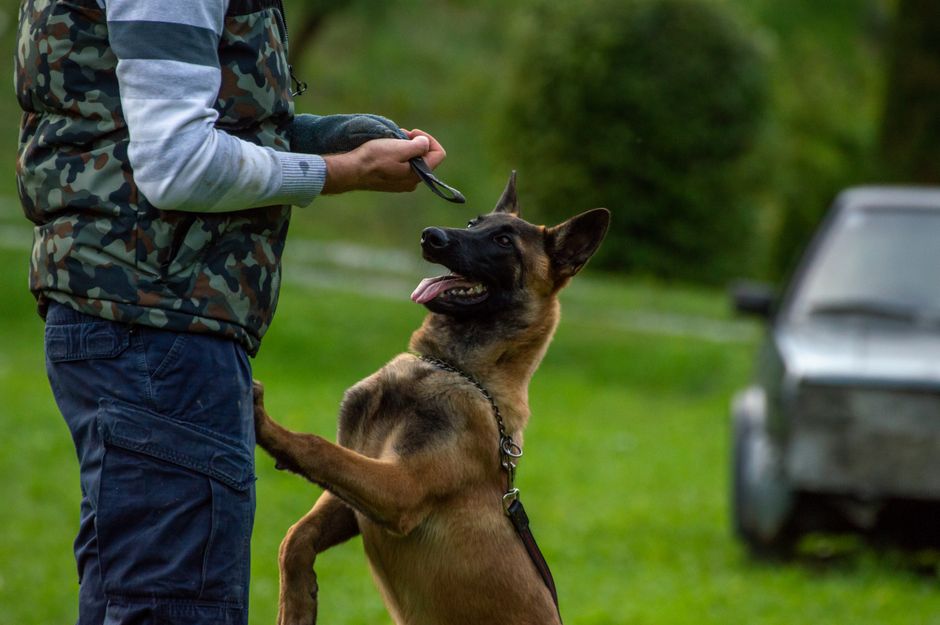
Free Dog Training Tips for Beginners: Real Methods That Actually Work
Every dog owner starts in the exact same spot: standing in the kitchen, treats in one hand, no idea what to actually do with them. Good news. You don’t need a fancy trainer or a pile of gear to raise a well-behaved dog without expensive classes. You just need a handful of methods that actually work, applied consistently, starting today.
Key Takeaways (the short version)
- Positive reinforcement beats punishment for building lasting obedience in dogs of any age.
- Five minutes of daily training beats one long weekly session, every single time.
- Barking almost always has a specific trigger, and fixing it starts with naming that trigger.
- Consistency from every household member matters more than any single training technique for building trust and good habits that last.
- Free resources like reputable training videos can replace expensive classes for basic obedience work.
Why do most beginner training attempts fail?
Most beginner training falls apart for boring, fixable reasons: mixed signals at home, sessions that drag on too long, corrections that scare the dog instead of teaching it, and skipping the groundwork before jumping to commands. Fix those four things and you’ve fixed 90% of what goes wrong in a typical household, the same fixes covered in these dog training tips for beginners that stop bad behavior fast.
Inconsistency is the silent killer. One person lets the dog on the couch, another yells about it. One person says “down” for lying down, another says “down” for getting off furniture. Your dog isn’t confused because it’s dumb. It’s confused because you’re sending contradictory instructions and expecting a unified response.
Long sessions kill attention span, especially in puppies. Ten focused minutes will always beat forty-five distracted ones. Push past the point where your dog checks out, and you’re not training obedience anymore. You’re training frustration.
Punishment looks like it works, briefly. A sharp correction can stop a behavior in the moment. But research on training methods, including ACV de Castro’s 2021 review of dog training methods, shows that harsher approaches carry real costs to the human-animal bond, even when they seem to suppress unwanted behavior short-term. An anxious, distrustful dog is not an obedient dog. It’s a dog waiting for the next correction.
Skipping the basics is the quiet mistake. Owners want “sit” and “stay” on day one. But a dog that doesn’t reliably respond to its own name, or hold eye contact with you for a beat, isn’t ready for commands yet. You’re building a house without a foundation.
What are the real free dog training tips for beginners?
The real starting point isn’t a command at all: it’s getting your dog to look at you on cue, rewarded with sharp timing on small, high-value treats, the foundation behind these free dog training tips for beginners. From there, you teach one command at a time, in short sessions, and you stop before your dog gets bored.
Here’s the actual sequence that works:
Start with name recognition and eye contact: say your dog’s name, and reward the instant they look at you. This is the skill every other command depends on. Then mark the moment, not two seconds later. Use a clicker or a sharp “yes” the instant the good behavior happens, then treat. Timing is everything, since a reward that lands late teaches the wrong thing.
Teach one command at a time. Sit first. Once that’s solid, move to stay. Once that’s solid, move to come. Stacking commands before the last one sticks just muddies the water. And keep sessions to five or ten minutes, ending on a win: if your dog just nailed a “sit,” stop there instead of pushing for one more rep and risking a miss.
For example, a rescue dog with no obedience background could start with just name recognition and eye contact before ever attempting “sit.” That’s not slow progress. That’s the correct order of operations.
One more thing worth knowing: aim for about 90% success on a new behavior before you attach a verbal cue to it. Slap a verbal cue on too early, and the word ends up meaning nothing to your dog.
How do I improve my dog’s obedience long term?
Long-term obedience comes from practicing in messy, real-world conditions, not just your kitchen, a principle at the core of this vet-backed guide to improving your dog’s obedience. Fade the treats gradually, add distractions on purpose, and keep revisiting the basics even after your dog seems to have them down. Obedience that only works in one quiet room isn’t obedience. It’s a party trick.
Change the location constantly. A dog that sits perfectly in the kitchen may completely ignore you in the backyard or on a sidewalk. Practice in different rooms, in the yard, on walks. Generalization takes deliberate repetition in new places.
Fade the treats, don’t yank them. Once a command is solid, start replacing food with praise, a quick game of tug, or a life reward like opening the door for a walk. Pull treats too fast and the behavior can crumble. Pull them too slow and your dog never learns to work for anything but food.
Add distractions on purpose. Practice “stay” with a ball rolling by. Practice “come” with another person calling the dog at the same time. Real life throws distractions at your dog constantly, so your training needs to as well.
Revisit the basics, always. Obedience is a muscle. Skip practice for a month and you’ll feel the difference. A quick refresher session once a week, even after your dog “knows” a command, keeps it sharp, similar to the structured practice built into an 8-week dog training plan.
Where do stop dog barking videos actually help?
A good stop dog barking video earns its keep by teaching you to identify the trigger first and the fix second. Skip anything that promises an instant cure or leans entirely on a gadget. Barking habits built over weeks or months don’t unwind overnight, no matter what the thumbnail claims.
Look for videos that walk you through teaching a “quiet” cue paired with a reward for silence, not just noise-blocking tools. For example, a dog that barks every time the doorbell rings might respond to a “quiet” cue paired with a reward for silence within three seconds. That’s a teachable, repeatable process. A bark collar is not.
Here’s the catch nobody puts in the video title: no two dogs bark for identical reasons. A video can show you the method. It can’t diagnose your specific dog. That part is on you.
Common Barking Triggers and Starting Fixes
| Trigger | What It Looks Like | First Step to Try |
|---|---|---|
| Boredom | Barking when left alone with nothing to do | Add a puzzle toy and longer pre-departure walk |
| Alert barking | Barking at doorbell, mail carrier, or passing dogs | Teach a ‘quiet’ cue and reward calm within seconds |
| Attention-seeking | Barking directed at you when ignored | Reward silence, ignore the bark completely |
| Fear or anxiety | Barking paired with retreating or trembling | Build confidence with gradual, low-stress exposure |
Match your dog’s barking to a row in that table before you touch a single training video, following the same logic used in vet-approved obedience training to stop barking for good. Fixing the wrong trigger just wastes your week.
What tools do you actually need to start?
You need almost none of what’s marketed to you. A treat pouch, small soft treats, and a regular collar or harness cover nearly every beginner scenario. Everything else is optional, and most of it is a distraction from doing the actual work.
Treats and a pouch. Small, soft, high-value treats work best because your dog can eat them fast and get back to training. A pouch keeps your hands free and your pockets from smelling like liver for a week.
A clicker, if you want one. Clickers help some owners mark behavior with more precision than a verbal “yes.” They’re useful, not mandatory. Don’t buy one and think you’ve failed if you’d rather just use your voice.
Skip the gadgets. Ultrasonic anti-bark devices, vibrating collars, barking apps promising instant fixes, anything promising a shortcut: skip all of it until you’ve actually tried basic reward-based training first. Most beginner problems don’t need hardware. They need repetition.
A notebook or an app. Jot down what you worked on and how it went. Seeing “sit: solid, stay: shaky” written down week over week shows you progress that’s easy to miss day to day.
The bottom line
Training your dog for free isn’t about cutting corners, it’s about understanding that the fundamentals (consistency, timing, and short daily reps) matter more than any paid program ever will. Master those basics and you’ll have a dog that listens not because you spent money, but because you showed up every day.
Frequently Asked Questions
How long does it take to see results from basic obedience training?
Most dogs start showing progress on simple commands within one to two weeks of daily short sessions. Full reliability, especially around distractions, usually takes a couple of months of consistent practice.
Is it too late to train an older dog with free methods at home?
Not at all. The saying about old dogs and new tricks is mostly myth. Older dogs often focus better than puppies since they have longer attention spans.
Do I need treats forever, or can I stop using them?
You can fade treats once a command is solid, swapping in praise, toys, or real-life rewards like going outside. Just don’t pull treats too early or the behavior can fall apart.
What if my dog only barks when I’m not home?
That’s usually boredom or separation anxiety, and it needs a different approach than in-your-face barking. Start with enrichment toys and consider recording your dog on video to see what’s actually triggering it.
Can I really train my dog without hiring a professional?
For basic obedience and common issues like barking or jumping, yes, plenty of owners succeed with free resources and consistency, much like the strategies in these 7 essential dog training tips that transform problem pups into perfect pets. If you hit a wall or you’re dealing with aggression, that’s when a professional trainer earns their fee.

One Comment