The Puppy Behavior Training Schedule That Fits Your Dog’s Actual Age
You brought home a puppy, not a robot. But that squishy little chaos machine needs a real plan or you’ll spend the next year chasing accidents and shredded shoes instead of enjoying the dog you thought you were getting. A puppy behavior training schedule isn’t about drilling commands like a boot camp instructor, and if you want the full framework laid out step by step, the puppy training blueprint for turning chaos into a well-behaved dog covers it in more depth. It’s about matching what you teach to what your puppy’s brain and body can actually handle at each age.
Key Takeaways (the short version)
- Puppy training works in age based stages, not a single one size fits all plan.
- Short frequent sessions beat long ones because puppy attention spans are tiny.
- Potty training, socialization, and bite inhibition all have their own critical windows.
- Consistency at home matters more than fancy tricks or expensive classes early on.
- A written weekly schedule keeps the whole household on the same page.
Why does a puppy need a training schedule at all?
Because puppies aren’t learning on a flat curve. There’s a stretch, roughly 3 to 14 weeks, where their brains are wired to soak up new experiences faster than they ever will again. Miss that window and you’re doing damage control later instead of building good habits from the start.
Without a schedule, most owners fall into the same trap: they react. The puppy chews the couch, so now there’s a correction. The puppy nips a kid’s hand, so now there’s a scramble. That’s not training, that’s cleanup.
A real schedule flips the order. You decide ahead of time what your puppy needs to practice this week, and you build small daily reps around it. That’s the whole trick. Training stops being one giant overwhelming project and becomes a handful of two-minute habits stacked into a normal day, the same kind of science-backed training that turns a wild puppy into a calm, well-behaved companion.
Puppy training schedule by age: what should you focus on when?
Different ages need different jobs, full stop. A 9 week old puppy and a 5 month old adolescent are not working on the same problems, and treating them like they are is where most home training plans fall apart.
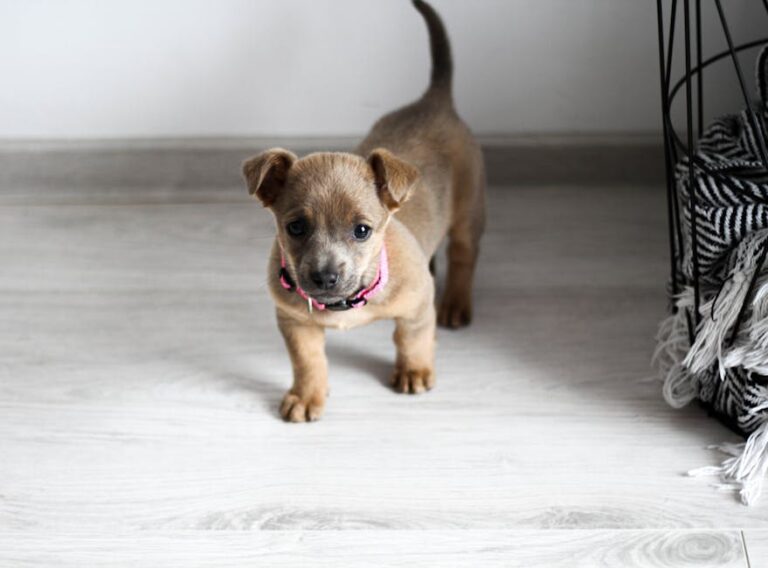
8 to 10 weeks. This is foundation time, matching the early priorities outlined in the 8-week dog training plan that skips classes entirely. Focus on name recognition, a simple potty routine, gentle handling so vet visits and nail trims don’t turn into wrestling matches, and calm, low pressure exposure to new sounds and surfaces. Nothing complicated. Just steady, positive first impressions.
10 to 12 weeks. Add crate training, a basic sit, and a reliable come. Keep socializing, but stay smart about it: safe environments and vaccinated dogs only. The American Kennel Club notes training can start as soon as your puppy comes home around 8 weeks, but housetraining specifically can take months, so don’t expect this stage to finish the job.
3 to 4 months. Adult teeth are coming in, which means bite inhibition work becomes non-negotiable. Layer in leash walking basics and simple impulse control games like “wait” before the food bowl drops.
4 to 6 months. Adolescence shows up, and it shows up loud. Reinforce the basics harder than you think you need to, and start adding real distractions: other people, traffic noise, dogs across the street. This is where sloppy training gets exposed.
| Age Range | Main Training Priorities | Typical Session Length |
|---|---|---|
| 8 to 10 weeks | Potty routine, name response, gentle handling, calm new experiences | 3 to 5 minutes |
| 10 to 12 weeks | Crate comfort, sit, come, controlled socialization | 5 to 7 minutes |
| 3 to 4 months | Leash manners, bite inhibition, impulse control games | 5 to 10 minutes |
| 4 to 6 months | Reinforcing basics around distractions, adolescence management | 10 minutes |
Picture a hypothetical 9 week old puppy who hears the leash clip jingle and immediately learns to associate that sound with sitting calmly, not launching into a jumping fit. That’s a stage-appropriate goal. Asking that same puppy to hold a stay near a busy sidewalk is not. Save that for the 4 to 6 month stage, once there’s an actual foundation to build on.
What does a realistic daily and weekly routine look like?
It looks smaller than you’d expect, and that’s the point. Break training into 3 to 5 short sessions a day, each capped at 5 to 10 minutes depending on age. Puppies under 6 months genuinely do best with 3 to 5 minute micro-sessions, so stop trying to force a 20 minute block on a 10 week old and calling it discipline.
Anchor potty breaks to a fixed rhythm instead of guessing: after waking up, after eating, after play, and right before bed. That predictability does more for housetraining than any single trick you’ll find online. The first 30 days at home should focus heavily on trust-building and short sessions around 5 to 10 minutes, with plenty of room left for socialization on top of it.
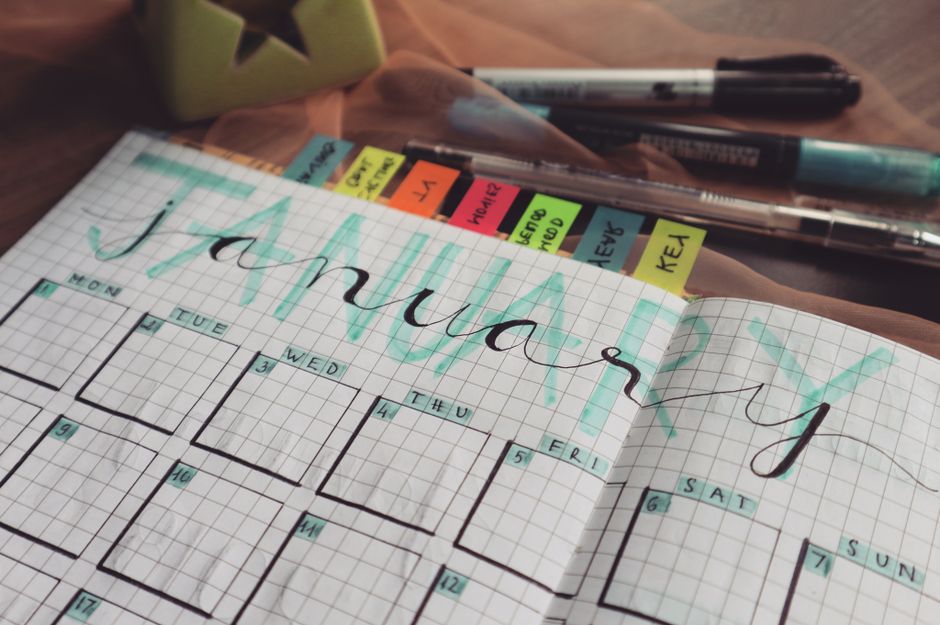
A weekly checklist keeps you honest, much like the daily routines that actually work in broader dog care planning. Cover one new skill, ongoing socialization exposures, and daily exercise, and write it down somewhere the whole household actually sees it.
And build in downtime. An overtired puppy doesn’t get calmer, it gets worse. Naps aren’t a break from training, they’re part of it.
How do you actually train puppy behavior at home without a trainer?
You lean on positive reinforcement, you manage the environment so bad habits never get a chance to form, and you get everyone in the house using the same words and rules—the same trust-building fundamentals covered in these beginner dog training tips. None of this requires a professional in the room—you can train your puppy at home successfully without ever booking a class—though plenty of owners choose to add one anyway.
Reward the instant your puppy does the right thing. Treats, praise, a quick play burst, whatever works, delivered immediately, not five seconds later once the moment’s already gone.
Management does half the work before training even starts. Baby gates, a crate, and a rotation of chew toys mean your puppy physically can’t rehearse the wrong behavior in the first place. That’s not cutting corners. That’s just smart setup.
Keep the household aligned. If one person says “off” and another says “down,” you’ve built confusion, not a command. Pick the words once and stick to them.
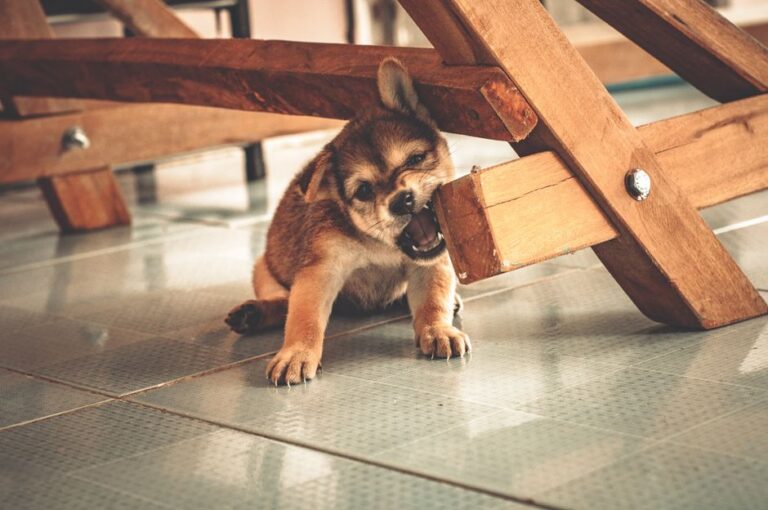
And redirect instead of just punishing after the fact, which is really the core idea behind correcting a puppy’s behavior the right way. A hypothetical 14 week old puppy mid-teething who nips at hands isn’t being defiant, it’s exploring with the only tool it has: its mouth. Redirect that bite onto a chew toy every single time, and the habit of biting skin fades because it never gets reinforced.
Common scheduling mistakes that stall progress
Most stalled progress traces back to timing errors, not a “bad” puppy. Fix the schedule and the behavior usually follows.
Skipping socialization over vaccine worries. Plenty of owners wait until a puppy is fully vaccinated before any real world exposure, and that delay costs them the critical window. Controlled, low-risk exposure (a friend’s healthy dog, a quiet parking lot, a car ride) still counts and still matters.
Only training when things go wrong. If the only time your puppy hears from you is after it’s already jumped on a guest, you’re teaching nothing proactively—proactive tips to stop bad behavior fast start well before the incident happens. Teach the replacement behavior before the problem shows up, not after.
Expecting adult focus from a baby. A 12 week old puppy failing to hold a sit for 30 seconds isn’t broken. It’s 12 weeks old. Adjust the expectation, not the puppy.
You’re not the only one leaning on outside structure here. 67% of owners in the Generation Pup study attended at least one puppy class before their dog hit 19 weeks, though about 7% only ever went to a single introductory session. Classes can genuinely help with socialization logistics, but they’re a supplement to your home schedule, not a replacement for it, especially if you’re still working on finding quality puppy training near you.
The bottom line
A puppy behavior training schedule isn’t about perfection, it’s about not leaving your dog’s habits to chance. Match the work to the age, keep sessions short, stay consistent across the household, and the good behavior sticks a lot faster than you’d expect.
Frequently Asked Questions
How many minutes a day should I actually spend training my puppy?
Aim for 15 to 30 total minutes a day, split into several tiny sessions. A 9 week old puppy simply cannot focus for one long block, so short and frequent wins every time.
When should potty training be basically done?
Most puppies get reasonably reliable by 4 to 6 months, but full bladder control often isn’t there until closer to a year. Stick to the schedule even after accidents drop off, because consistency locks in the habit.
Is it too late to start a schedule if my puppy is already 4 months old?
No, it’s not too late at all. You’ll just move faster through some basics and lean harder into impulse control and distraction training since adolescence is already starting.
Do I need puppy classes or can I train entirely at home?
You can absolutely build solid manners at home with a good schedule. Classes add value mainly for structured socialization with other dogs and people, which is harder to replicate solo—if you do go that route, finding the perfect puppy trainer in your area can make the search less overwhelming.
What if my puppy regresses on something like potty training?
Regressions are normal, especially around teething or big changes at home. Go back to a stricter version of the schedule for a week or two rather than assuming something is broken.