Dog Nutrition Requirements: Why That Feeding Chart Is Wrong for Your Dog
Your dog’s food bag has a feeding chart on the back, and it’s probably wrong for your actual dog, which is exactly why learning how to calculate perfect portions beyond generic feeding charts matters more than what’s printed on it. Breed, age, activity level, even whether your pup is fixed: all of it changes how much they actually need to eat. Get the math wrong and you end up with a chunky Labrador wheezing on walks or a bony Border Collie who can’t keep weight on. Let’s fix that.
Key Takeaways
- Dogs need six core nutrient groups: protein, fat, carbs, vitamins, minerals, and water.
- Feeding chart numbers on kibble bags are starting points, not gospel for your specific dog.
- Weight loss plans need a calorie deficit plus enough protein to protect muscle mass.
- Puppies, seniors, and pregnant dogs have nutrient needs that look nothing alike.
- A quick calorie calculation beats guessing with a measuring cup every single time.
What Do Dogs Actually Need in Their Diet?
Dogs need six things from food: protein, fat, carbohydrates, vitamins, minerals, and water, the foundation laid out in this science-backed guide to dog nutrition that vets actually recommend. Miss one for long enough and it shows up somewhere, usually the coat, joints, or energy level. Get all six right and most of your “is my dog okay” worries solve themselves.
Protein builds and repairs muscle. Growing puppies and working dogs need more of it than the retriever who mostly retrieves the couch. The AAFCO minimum sits at 22.5% dry matter for growing dogs and 18% dry matter for adults, and that’s a floor, not a target to aim for.
Fat is the calorie-dense fuel source, and it’s also the delivery truck for vitamins A, D, E, and K. Most adult dog foods land somewhere between 5% and 15% fat on a dry-matter basis, while puppy formulas run higher because growing bodies burn through more energy per pound.
Carbs aren’t technically essential the way protein and fat are, but they’re not the enemy either. They give quick energy and the fiber that keeps a gut running on schedule. Then there’s vitamins, minerals, and water, the basics that actually matter, unglamorous but non-negotiable. Skip on any of them and you’ll see it in dull coats, weak joints, or a dog that’s tired for no obvious reason.
How Many Calories Does Your Dog Really Need?
Start with your dog’s Resting Energy Requirement: bodyweight in kilograms, raised to the 0.75 power, multiplied by 70. That number is baseline fuel for doing nothing. Everything else, like activity, age, and whether they’re fixed, gets layered on top as a multiplier.
Here’s the thing nobody puts on the bag: RER is just step one. You multiply it by an activity factor to get your dog’s real daily need. A neutered, low-activity adult might sit around 1.6x RER. An intact, highly active working dog can climb past 2x. Puppies and pregnant or nursing dogs need even more, sometimes dramatically more.
Doing this math by hand every time is a pain, which is why a nutrition for dogs calculator exists. Plenty of vet schools and pet food companies host free ones online, and they automate the RER formula while adjusting for life stage. Punch in weight, age, and activity, and you get a number in seconds instead of squinting at a bag chart designed for an “average” dog that doesn’t exist.
Here’s the catch: every number in this section, and every calculator’s output, is still an estimate. Your dog is not a statistic. Weigh them every couple of weeks, check body condition with your hands, and adjust the bowl based on what you actually see, not on what a formula predicted.
Building a Dog Diet Chart for Weight Loss
A real weight loss plan starts with a moderate calorie deficit, typically 10 to 20 percent below maintenance, and it keeps protein high so the pounds that come off are fat, not muscle. Crash diets don’t work on dogs any better than they work on people. Slow and steady wins here, full stop.
Once you know maintenance calories, sourced from a resource like this complete guide to dog nutrition, recipes, and calculators, cut them by that 10 to 20 percent window. Don’t go lower unless a vet is actively managing the plan, because starving a dog into “skinny” usually just makes them miserable and metabolically worse off.
Protein is your best friend during a cut. NRC guidelines put minimum adult protein at 20 grams per 1000 kcal consumed, and during weight loss you want to be well above that floor, not hovering at it. High protein keeps lean muscle intact while the fat comes off, which is the whole point.
Want your dog to actually feel satisfied on fewer calories without straining your wallet, the kind of balance covered in feeding your dog excellent nutrition without breaking the bank? Swap some kibble volume for low-calorie, high-fiber vegetables like plain green beans. They add bulk and crunch without the calorie load, so the bowl still looks full even when the math says less.
Then recheck. Every two to four weeks, weigh your dog and run your hands along their ribs. If the trend line isn’t moving, adjust the portion. Don’t just keep feeding the same amount for three months and hope biology catches up.
Does Ideal Nutrition Change by Life Stage or Breed?
Yes, dramatically, and treating every dog like a generic “adult dog” is where most feeding charts fall apart. Puppies, seniors, and pregnant dogs aren’t smaller or older versions of the same nutritional needs. They’re different animals with different fuel requirements entirely.
Puppies need more protein, fat, and calories per pound than adults to support rapid growth. That’s why puppy food runs hotter across the board, including fat levels that can reach 8% to 20% on a dry-matter basis compared to a leaner adult formula.
Take a hypothetical Great Dane puppy as an example. Large and giant breed puppies need tightly controlled calcium and calorie intake, because too much of either during that growth window sets the stage for skeletal problems down the road. This is not a place to eyeball portions. Feed a large-breed-specific puppy formula and follow it closely, using the same care outlined in choosing the best puppy food for a Golden Retriever’s needs.
Senior dogs flip the script: fewer calories, because they’re slowing down, but more support for joints. Think a hypothetical senior Beagle managing stiffness, who does better on fewer calories overall paired with omega-3s and glucosamine layered in.
Pregnant and nursing dogs are the outlier at the other extreme. Calorie needs can spike to two or three times normal maintenance during late pregnancy and nursing. That’s not a typo, and it’s not optional. Underfeed a nursing mother and both she and the litter pay for it.
And don’t forget the quieter life change: neutering. Picture a hypothetical 8-year-old Labrador who’s packed on weight since getting fixed. That’s not a coincidence or bad luck. Spaying and neutering lower metabolic rate, so the calorie number that worked before surgery is almost always too high afterward. Recalculate, don’t just keep scooping the same cup.
Reading a Dog Food Label Like You Mean It
A dog food label tells you almost everything you need to know, if you know where to look, much like the breakdown in this complete 2026 feeding guide. Start with the AAFCO statement, then check the guaranteed analysis, then look at where the protein actually comes from.
The AAFCO statement confirms the food is complete and balanced for a specific life stage, whether that’s growth, adult maintenance, or “all life stages.” No statement, no guarantee the food covers what your dog needs long-term.
The guaranteed analysis lists percentages for protein, fat, fiber, and moisture, but treat these as minimums and maximums, not exact values. Two bags with identical numbers on the label can still perform differently depending on ingredient quality.
Finally, check the protein source. Named meats like chicken, beef, or salmon beat vague catch-alls like “meat by-products” every time. It’s not that by-products are automatically bad, but named sources give you actual information, and information is what you’re paying for on that label.
Rough Daily Calorie Needs by Dog Weight and Activity Level
Use this as your gut-check table, not your final answer, since the numbers you actually need depend on your dog’s specific breed, age, and activity level. Cross-reference it against your own calorie math and adjust from there.
| Dog Weight | Low Activity (lap dog) | Moderate Activity (daily walks) | High Activity (working/sporting dog) |
|---|---|---|---|
| 10 lbs | ~200-250 kcal | ~250-300 kcal | ~300-400 kcal |
| 30 lbs | ~500-600 kcal | ~600-750 kcal | ~750-950 kcal |
| 60 lbs | ~850-1,000 kcal | ~1,000-1,300 kcal | ~1,300-1,700 kcal |
| 90 lbs | ~1,200-1,400 kcal | ~1,400-1,800 kcal | ~1,800-2,300 kcal |
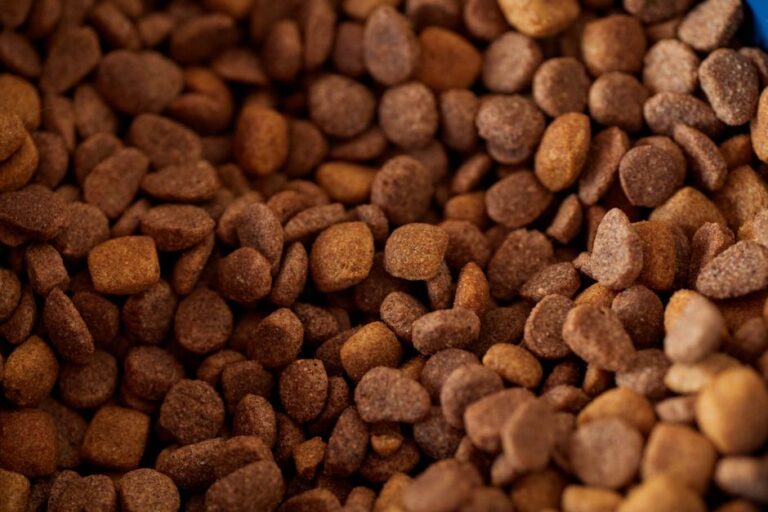
Worth noting: most dog owners feed kibble as the primary diet, which means the bag’s serving suggestion is doing most of the heavy lifting in a lot of households. That’s exactly why these ranges matter as a sanity check against whatever the bag tells you.
The Bottom Line
Dog nutrition isn’t complicated once you stop trusting the bag and start trusting the math: bodyweight, activity, life stage, and a scale you actually use. Do that, and the weight loss chart practically writes itself. Your dog doesn’t need a perfect diet. They need one built around who they actually are, not around the “average” dog printed on the packaging.
Frequently Asked Questions
How do I know if my dog is overweight and not just ‘big boned’?
Feel for ribs with light pressure. You should find them easily without pushing through a thick layer of fat. Look from above too: a healthy dog has a visible waist tuck behind the ribs, not a straight barrel shape from shoulders to hips.
Can I just feed less of my dog’s current food to help it lose weight?
You can, but cutting portions of a maintenance food too aggressively risks vitamin and mineral shortfalls, since the whole formula was balanced around a higher calorie count. A weight management formula or a vet-guided plan keeps nutrients balanced even when calories drop.
Do grain-free diets have anything to do with nutrient requirements?
Grain-free isn’t automatically healthier, and it’s been linked to heart issues in some dogs, an area the FDA has investigated. Focus on complete, balanced nutrition for your dog’s actual life stage rather than chasing grain-free as a trend.
How often should I actually recalculate my dog’s food needs?
Check in whenever life changes: after spaying or neutering, a big shift in activity level, or every birthday as they move into a new life stage. Outside of those moments, a monthly weigh-in and body condition check is enough to catch drift before it becomes a real problem.
Are human foods ever okay to use in a dog’s diet plan?
Some, like plain cooked chicken, pumpkin, or green beans, work fine as low-calorie additions or treats. Others, like onions, grapes, and anything with xylitol, are genuinely dangerous, so know the no-list cold before you start sharing from your plate.