Nutrition for Dogs PDF: What a Real Guide Covers (and Skips)
You typed “nutrition for dogs pdf” into Google because you want a real feeding plan, not fifty conflicting blog posts and a sales pitch for kibble. Fair enough. The good news is a solid PDF guide exists out there, but most of what shows up first is fluffy filler dressed up as science. Let’s fix that: what a real nutrition PDF should include, how homemade feeding actually works, and what changes when your dog is fighting cancer.
Key Takeaways (the short version)
- A trustworthy dog nutrition PDF names specific nutrient targets, not just “feed fresh food and love.”
- Homemade diets need a recipe formulated by a veterinary nutritionist, not a recipe you found on Pinterest.
- Dogs with cancer have real nutritional needs that differ from healthy dogs, but there is no magic anti-cancer diet.
- AAFCO and WSAVA guidelines exist for a reason: they catch the deficiencies that homemade diets often miss.
- Free PDFs are a starting point for education, never a substitute for your vet or a board-certified nutritionist.
Why Is “Nutrition for Dogs PDF” Such a Popular Search?
Because people want something they can save, print, and actually reference at 2am instead of doom-scrolling forum threads written by strangers with opinions and no credentials. A PDF feels solid. Final. Done. That’s the appeal, and it’s also exactly where things go sideways.
A PDF feels more authoritative than a blog post, even when the content is identical fluff with a nicer font. You download it, you close the tab, you feel like you’ve handled it. That feeling is the trap.
A lot of these searches happen right after a vet visit where nutrition got maybe five rushed minutes at the end of the appointment. You nodded along, then got in the car and thought “wait, what was I supposed to feed again?”
And the demand spikes hard around specific moments: a new puppy who needs a growth plan, a dog who’s suddenly overweight, or a diagnosis that changes everything, like cancer. Those are the moments when “good enough” information isn’t good enough anymore.
Dog owners are also increasingly open to feeding approaches that go beyond kibble. Over 84% of respondents currently fed conventional or raw meat-based dog food, but over 43% found at least one alternative diet acceptable, which tells you people are actively looking for other options, not just blindly trusting whatever’s on the shelf.
What Does a Legit Dog Nutrition PDF Actually Need to Include?
A real guide names numbers. That means specific protein percentages, calcium ranges, and calorie math tied to body weight, referenced against AAFCO or NRC standards, not vague phrases like “balanced diet” or “whole food nutrition” that sound nice and mean nothing.
Here’s what separates a credible document from a glossy brochure:
Specific nutrient targets. AAFCO’s Growth and Reproduction profile sets a minimum crude protein concentration of 22.5% of dry matter for puppies, and that number matters because adult maintenance requirements run lower. If a PDF doesn’t distinguish between life stages, it’s not built for real dogs, it’s built for pageviews.
Life-stage accuracy. A growing puppy, a healthy adult, and a senior dog are not the same nutritional animal. Digestibility itself shifts with age: research comparing adult and senior dogs found food type impacts nutrient digestibility differently depending on life stage, which is exactly why “one feeding plan fits every dog” is a lazy shortcut, not a strategy.
Fiber and micronutrient context. Typical adult dog diets run between 2.5 and 4.5% fiber, and a PDF worth your time will explain why that range matters instead of just throwing a number at you with no context.
Portions tied to your actual dog. Not a generic cup measurement on the back of a bag, the same oversimplified logic behind many dog feeding charts. Real portion guidance accounts for body condition score, weight, and activity level.
A disclaimer that actually means something. If the PDF doesn’t tell you to loop in a vet or veterinary nutritionist before you change anything long-term, that’s not confidence. That’s a liability dodge.
Homemade Nutrition for Dogs: What It Really Takes
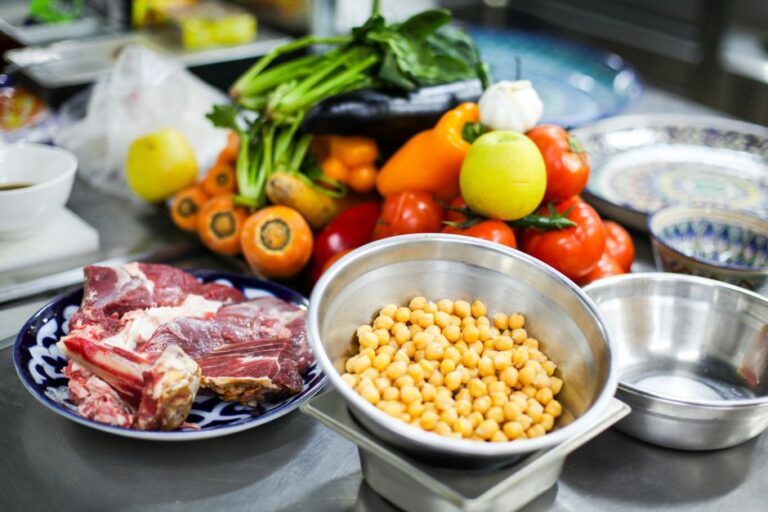
Cooking for your dog sounds simple right up until you realize calcium, zinc, and the right fatty acid ratios don’t just show up in a pan of chicken and rice. Most kitchens don’t naturally produce a nutritionally complete meal, and that gap is the single biggest risk in homemade feeding.
A single recipe, made once and repeated forever, almost always falls short somewhere. Maybe it’s calcium. Maybe it’s an essential fatty acid. Maybe it’s a trace mineral nobody thinks about until a dog’s bloodwork comes back weird.
This isn’t a hypothetical worry: data from over 43,517 online surveys and information on 27,478 dogs shows a real, measurable link between what you feed and how your dog actually does.
This is where board-certified veterinary nutritionists earn their keep. Nutritionists certified through the American College of Veterinary Nutrition formulate recipes matched to your dog’s exact size, condition, and medical history, not a generic template pulled off Pinterest. That’s the difference between a recipe that sounds healthy and one that actually is.
Take a hypothetical golden retriever with chronic allergies to common commercial proteins. Cooking at home might be the right call there, but it only works if the recipe is actually built to hit calcium, zinc, and fatty acid targets, and reviewed by someone qualified to check that math.
Rotating a small set of vet-approved recipes and calculators also beats locking in on one “perfect” homemade meal forever. Nutrient needs aren’t static, and neither should your dog’s menu be.
Nutrition for Dogs With Cancer: What Actually Changes
Cancer and chemotherapy can quietly hijack how a dog’s body processes protein and fat, tank appetite, and trigger weight loss that’s more dangerous than the tumor conversation alone. The needs here are real, but there’s no single magic diet that treats cancer like a switch you flip.
Some research has looked at higher-fat, lower-simple-carbohydrate diets in dogs with certain cancers, and the early interest is understandable. But the evidence is limited, it doesn’t apply universally across cancer types, and it’s absolutely not a reason to self-prescribe a diet off a PDF you found at midnight.
What matters more in practice is cachexia, the muscle wasting and weight loss that often comes with cancer and its treatment. Chasing a theoretically perfect macronutrient ratio while a dog is losing muscle mass is backwards priorities.
Picture a hypothetical senior dog recently diagnosed with lymphoma, mid-chemotherapy, barely touching the bowl. The win there isn’t nutritional perfection. It’s calories going in, consistently, in whatever form the dog will actually eat, whether that’s a favorite treat or a nutrition gel built for dogs who won’t eat.
Any diet change during cancer treatment needs to go through your vet or a veterinary oncologist, ideally with a nutritionist in the loop, the kind of team effort that helps you catch problems before they become emergencies. This isn’t the place to experiment solo.
How Do You Spot a Bad Nutrition PDF (and Find a Good One)?
A bad PDF hides who wrote it, skips citations, and promises a “cure” or “complete solution” in suspiciously simple terms. A good one shows its sources, names real nutrient numbers like you’d find in a science-backed dog nutrition guide vets actually recommend, and tells you plainly when to stop reading and call your vet.
Red flags:
- No author credentials listed anywhere.
- No citations to AAFCO, NRC, WSAVA, or peer-reviewed research.
- Recipes with no calcium source, which is consistently the most common gap in homemade dog food.
- Language that promises a cure, a complete fix, or guarantees with zero caveats.
Green flags:
- Comes from a veterinary school, WSAVA, or an actual veterinary nutrition service.
- Shows its math: specific percentages, specific milligrams, specific sources.
- Is upfront about what it can’t tell you and when to get a professional involved.
Think about a hypothetical rescue dog with no known diet history. The new owner wants something documented and printable to bring to the vet appointment, not a cure-all. That’s the right instinct: use the PDF as a conversation starter, not a prescription.
And a general rule worth repeating: whatever PDF you find, bring it to your vet before feeding it to your dog for more than a day or two. Even nutrient composition in commercial over-the-counter diets varies more than people assume; a study evaluating over-the-counter adult and senior canine diets found real variation across products marketed for the same life stage. If commercial food needs that scrutiny, your homemade recipe needs it even more.
Commercial vs Homemade vs Vet-Formulated Diets
| Approach | Nutritional balance risk | Time and cost | Best fit |
|---|---|---|---|
| Commercial complete kibble or canned food | Low, if AAFCO-compliant | Low cost, no prep time | Most healthy dogs without special needs |
| Homemade recipe found online (unverified) | High, common gaps in calcium and micronutrients | Moderate time, ingredient cost varies | Not recommended long-term without vet review |
| Homemade recipe formulated by a veterinary nutritionist | Low, built to meet nutrient targets | More prep time, plus consult cost | Dogs with allergies, picky eaters, or specific medical needs |
| Therapeutic prescription diet (including cancer support) | Low, formulated for the specific condition | Higher cost, minimal prep | Dogs with diagnosed conditions like cancer or kidney disease |
Picture a hypothetical Labrador puppy owner trying to figure out how much protein and calcium a growing pup actually needs. This table is exactly the kind of thing that belongs in the PDF they download, printed, and taped to the fridge.
The Bottom Line
A PDF can teach you the basics that actually matter, but it can’t examine your dog, run bloodwork, or catch the calcium gap in your homemade recipe. Use free guides to get smarter, then put an actual vet or veterinary nutritionist in charge of anything that touches your dog’s plate long-term, especially if cancer is part of the picture.
Frequently Asked Questions
Is there a free, reliable nutrition for dogs PDF I can trust?
Some exist from veterinary schools and organizations like WSAVA, and they’re worth reading for general education. Just don’t use them to build a full homemade diet without a professional double-checking the math.
Can I just feed my dog what I eat if it’s healthy for me?
No. Dogs need different calcium, protein, and fat levels than humans, and some human foods like onions, grapes, and xylitol are outright dangerous. Healthy for you doesn’t mean balanced for a dog.
Is there a specific diet that fights cancer in dogs?
Not one backed by strong, consistent evidence. Some studies suggest certain fat and carbohydrate adjustments might help specific cancers, but this is a conversation for your vet or oncologist, not a PDF download.
How do I know if a homemade recipe is actually balanced?
Check whether it lists specific gram or milligram amounts for calcium, and whether it was formulated or reviewed by a board-certified veterinary nutritionist. If it just says “mix and serve,” be skeptical.
My dog has cancer and won’t eat. What matters most right now?
Getting calories in matters more than getting the ratios perfect. Talk to your vet about appetite stimulants or liquid nutrition options for dogs who can’t eat rather than chasing a theoretically perfect anti-cancer meal.