Dog Grooming Methods That Turn a Wrestling Match Into a Five-Minute Non-Event
Your dog does not care about a shiny coat. He cares about not getting ambushed by clippers, hoses, and nail files he does not understand. Dog grooming is not a beauty routine, it is a skill you build together, and once you know the actual methods and read what your dog is telling you, it stops being a wrestling match and starts being just another Tuesday.
Key Takeaways (the short version)
- Grooming methods split into five jobs: brushing, bathing, nail trims, ear care, and coat trimming.
- A basic dog grooming kit costs less than one vet visit and pays for itself in months.
- The 4 F’s (fight, flight, freeze, fidget) explain why your dog squirms, bolts, or shuts down mid-groom.
- Short, frequent sessions beat one long dreaded groom every single time.
- Coat type, not breed reputation, decides how often and how hard you need to work.
What are the actual dog grooming methods?
Grooming boils down to five core techniques, not one big blurry chore: brushing, bathing, nail trims, ear care, and coat trimming. Each one has its own tools and its own rhythm, and trying to wing it with whatever is in your bathroom cabinet is how you end up with a dog who dreads the whole routine.
Brushing depends entirely on what’s growing on your dog. Slicker brushes work the undercoat loose on double-coated breeds, bristle brushes suit short, smooth coats, and double coats especially need detangling attention before mats set in, not after.
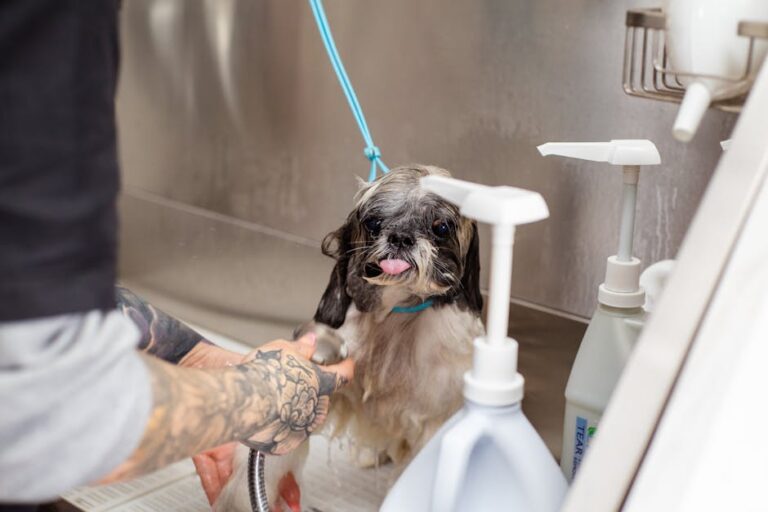
Bathing is not a weekly ritual for every dog. How often you bathe him depends on his coat and how much time he spends rolling in something disgusting, not on a fixed schedule. Over-bathing strips the natural oils that keep skin and coat healthy, so more is not automatically better if your goal is a dog that looks scruffy to salon-fresh at home without overdoing it.
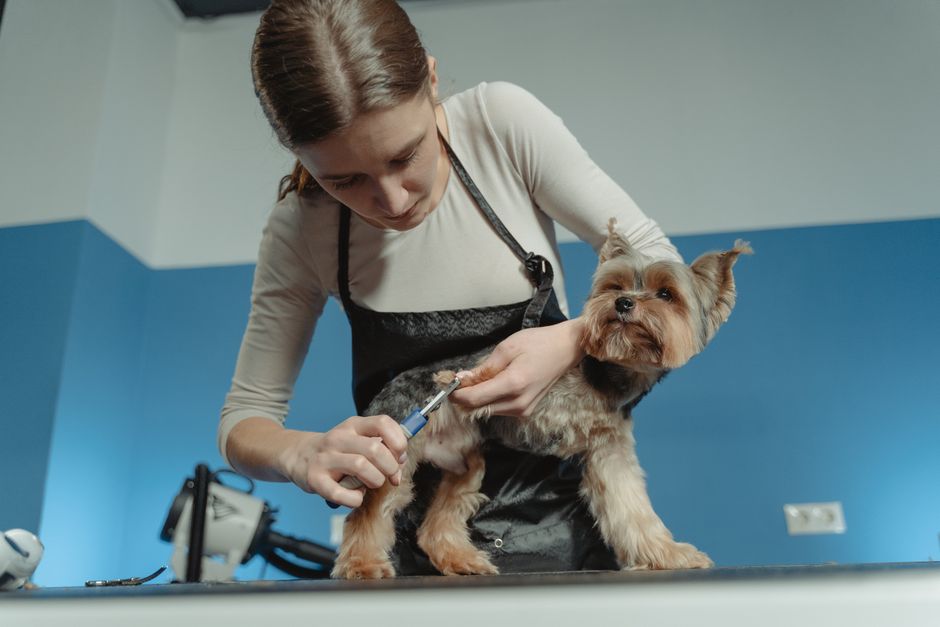
Nail trims matter more than most owners think. Overgrown nails actually change how a dog walks, forcing weight onto the wrong parts of the paw. Clippers work for most dogs, grinders suit dogs who hate the pinch-and-snap sound, and either beats letting nails click across the floor for another month, especially once you’ve watched a few video tutorials that actually work to get the angle right.
Ear cleaning and coat trimming round it out. Routine ear checks catch infections while they’re still cheap and easy to treat, and trimming around the eyes and paws keeps both areas sanitary. None of this is optional maintenance you can skip because your dog “seems fine.”
Building a dog grooming kit that actually gets used
A grooming kit that lives in a drawer you forget about is not a kit, it’s clutter. The right one has five core pieces: a slicker brush, nail clippers or a grinder, dog-safe shampoo, ear cleaner, and blunt-tip scissors, and building the right kit should match your dog’s actual coat, not a generic “dog” category.
A Poodle’s kit and a Beagle’s kit have almost nothing in common. One needs detangling spray and a slicker brush on standby, the other needs a soft bristle brush and not much else. Buy for the coat in front of you, not the breed on the box.
Skip human products entirely. Human shampoo and nail clippers can hurt a dog’s skin and quick, since our pH and our tools were never built for a dog’s body. It’s a small cost to buy the dog-specific version, and it removes the temptation to improvise with what’s already under your sink.
Where you store the kit matters almost as much as what’s in it. Keep it somewhere visible, on a shelf you pass daily, not buried in a closet. A kit you have to hunt for is a kit that turns into a monthly emergency instead of a habit.
This isn’t a fringe preference either: at-home grooming is already the most common way owners handle grooming, ahead of full-service salons, mobile groomers, and retail grooming counters combined. You’re not doing something unusual by grooming at home. You’re doing what most dog owners already do.
What are the 4 F’s of dog behavior, and why do they matter at grooming time?
The 4 F’s, fight, flight, freeze, and fidget (sometimes called “fool around”), are stress responses, not disobedience. A dog snapping at nail clippers isn’t being stubborn or dominant. He’s telling you, in the only language he has, that he’s scared.
Fight shows up as growling, snapping, or air-biting near the tool that scares him. That’s fear talking, not a behavior problem you need to punish out of him.
Flight is the dog trying to physically leave, squirming off the table or bolting from the bathroom. Chasing him down only confirms that grooming means being cornered.
Freeze is the sneaky one. A dog gone totally still during a bath can look calm and cooperative, but it’s often a shutdown response, not relaxation. Watch the whole body, not just the stillness.
Fidget covers the wiggling, lip-licking, low-level squirming that looks like mild annoyance but is still stress trying to escape somehow.
Spotting any of the four early, and learning to read the signals, skip the guesswork, lets you pause, back off, and rebuild trust instead of forcing through a session that’s already going sideways. Push through it and you teach your dog that grooming is something to fear even more next time.
Dog grooming tips and tricks that make it easier
The tricks that actually work all lean on the same idea: make grooming boring and predictable long before it needs to happen for real, turning grooming from chore to bonding time. Desensitize early, pair tools with good things, keep sessions short, and time them for when your dog is naturally calm.
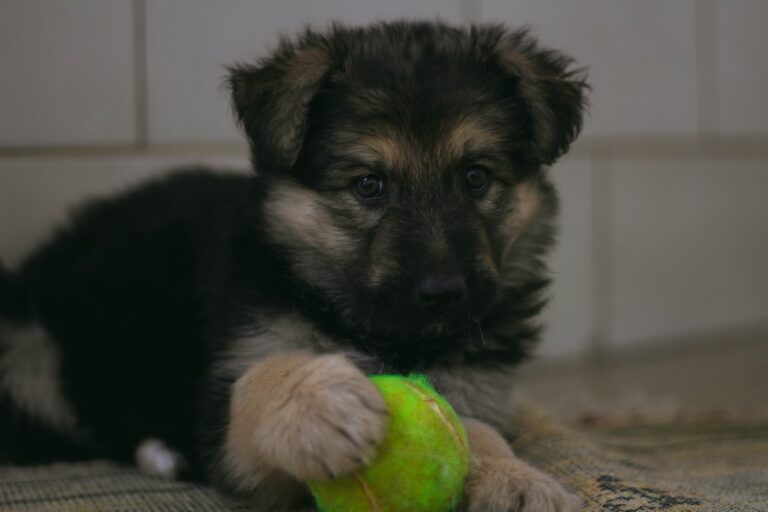
Start young. Touch paws, ears, and mouth during calm play, long before the first real grooming session. A puppy that gets its paws handled daily during play grows into an adult who tolerates nail trims without a fight, because the sensation stopped being novel years ago.
Pair every tool with treats before it ever touches your dog. Let him sniff the clippers, hear the dryer from across the room, see the brush, and get rewarded each time, so the object predicts good things instead of dread.
Keep sessions short. Five focused minutes beats thirty minutes of a dog actively trying to escape. Short sessions also mean you quit while things are still going well, which matters more than most owners realize.
Groom after exercise. A dog who just had a walk or a solid play session is naturally calmer and less reactive to handling than one who’s wound up and bored.
How often should you actually groom, by coat type?
The honest answer is: it depends entirely on what’s growing on your dog, not on his breed’s reputation, which is why a step-by-step approach at home beats generic breed advice. Short coats need less brushing but still need nail and ear attention. Double coats need serious brushing during shedding season. Curly and wire coats often need a professional in the loop every few weeks.
| Coat type | Brushing frequency | Extra attention needed |
|---|---|---|
| Short/smooth (e.g. Beagle, Boxer) | Weekly | Nail trims, ear checks |
| Double coat (e.g. Husky, Corgi) | 2-3x weekly, daily during shedding season | Undercoat rake, watch for matting |
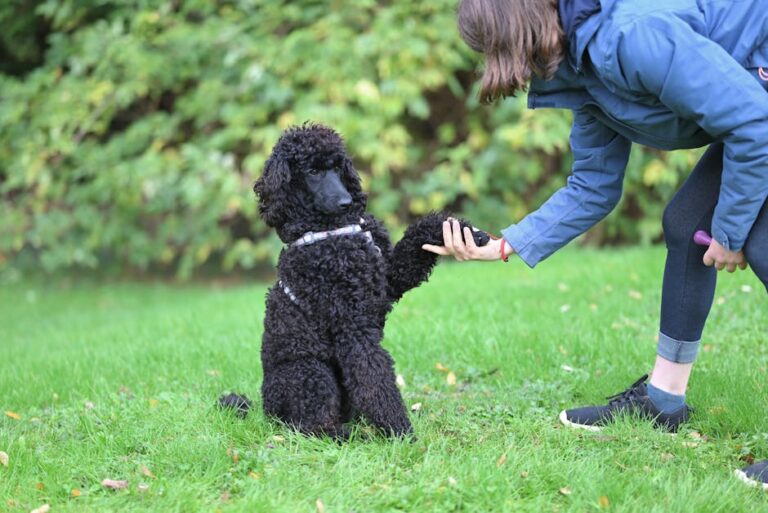
| Curly/wire (e.g. Poodle, Terrier) | Every 1-2 days | Professional trims every 4-6 weeks |
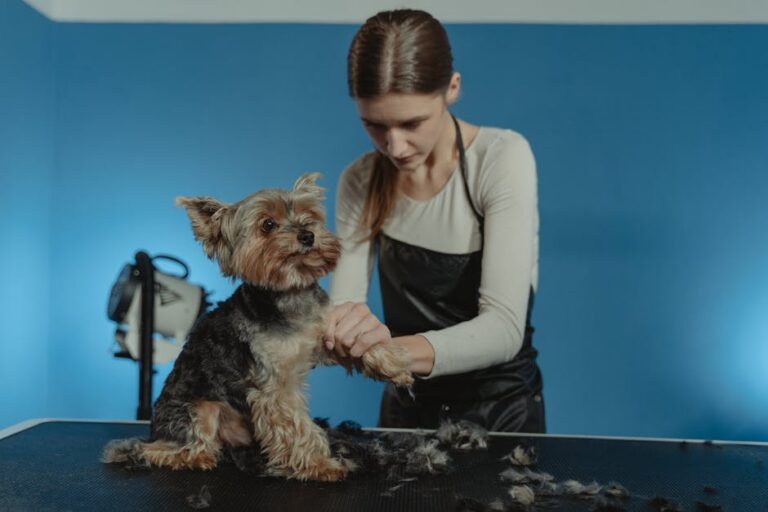
| Long silky (e.g. Yorkie, Shih Tzu) | Daily | Detangling spray, face and paw trims |
A double-coated dog left unbrushed through a seasonal shed doesn’t just get a little scruffy. He develops mats dense enough to require a full shave-down instead of a simple trim, which is a rough outcome for a problem a rake and ten minutes a day would have prevented. Puppies of any coat type benefit from more frequent, shorter sessions early on too, since that repetition is what builds a dog who tolerates grooming for life.
If you’d rather outsource some of this and follow a professional groomer’s playbook for calmer sessions, professional grooming typically runs on its own schedule: full coat trims every 6-8 weeks, bathing and nail trims every 8-12 weeks, with total costs landing in the same range as one modest vet visit.
It’s also worth remembering that grooming isn’t purely cosmetic. One informal bacteria swab test found fur and mouth bacteria counts dropping from 34.7 million CFUs to just 10 after a full groom, which is a reminder that a groomed dog is a cleaner dog in a very literal sense, not just a better-looking one.
The bottom line
Grooming is not about making your dog look good for Instagram, it is about handling him without a fight and catching health problems before they become expensive ones, the kind of ground covered in any solid dog grooming guide. Learn the methods, build a kit that fits his coat, and pay attention to what his body is telling you, and grooming turns from a monthly ordeal into a five-minute non-event.
Access is a real factor too: 92% of surveyed pet owners reported at least one barrier to keeping up with grooming, whether that’s cost, transportation, or just time. Doing more of it at home, with the right tools and the right read on your dog, is one of the most practical ways around that barrier.
Frequently Asked Questions
How do I know if my dog’s grooming stress is normal nervousness or something more serious?
Mild wiggling and occasional lip licks are normal. Growling, snapping, freezing solid, or trying to flee every single time means you need to slow way down and possibly bring in a trainer or fear-free groomer.
Can I use human shampoo on my dog in a pinch?
Don’t. Dog skin has a different pH than ours, and human shampoo can dry it out or cause irritation. Keep a bottle of dog shampoo on hand so you’re never tempted.
How young should I start handling my puppy for grooming?
As early as eight weeks old. Short, gentle touch sessions on paws, ears, and mouth build the foundation for a dog who tolerates grooming as an adult without a fight.
Do I still need a groomer if I do this at home?
For most coat types, yes, at least occasionally. Home grooming handles day-to-day maintenance, but professional trims, expert nail work, or anal gland checks are worth outsourcing.
My dog freezes during baths, is that a good sign?
Not necessarily. Freezing can look like calm compliance but is often a stress response. Watch for a tucked tail, pinned ears, or whale eye alongside it before assuming your dog is fine.