Dog Grooming Tips for Beginners: The No-Stress Playbook for a Calmer Pup
Your dog does not care about your grooming credentials. He just wants the clippers to stop buzzing and the bath to be over. Good news: you do not need a license or a fancy setup to keep him clean, comfortable, and looking sharp. You just need the right order of operations and a little patience. Here is the beginner’s step-by-step playbook for dog grooming, minus the guesswork.
Key Takeaways
- Brushing before bathing prevents mats from tightening into painful, unremovable knots.
- The right tool for your dog’s coat type matters more than any technique you’ll learn.
- Go slow with clippers around the face, ears, and paws where dogs are most sensitive.
- A calm, short first session beats a marathon grooming appointment every single time.
- Nail trims and ear checks matter as much as the haircut, so don’t skip them.
- Professional groomers rely on the same fundamentals, just with sharper tools and more reps.
What do you actually need before you start grooming at home?
You need less than the pet store wants you to believe. A slicker brush, a metal comb, dog shampoo, blunt-tip scissors, and a basic clipper kit will handle most dogs, most of the time. Skip the salon-grade gear until you know what you’re doing.
Here’s the real starter kit:
- A slicker brush and metal comb. These two cover most coat types on their own.
- An undercoat rake, if you own a double-coated breed. A slicker brush alone will miss the dense layer underneath and you’ll wonder why your dog still looks shaggy after every session.
- Blunt-tip scissors and a basic clipper kit. Enough for trims and touch-ups. Save the salon-grade blades for when your hands are steady and your dog actually holds still.
- Dog-specific shampoo. Human shampoo strips the natural oils that protect a dog’s skin, and that’s not a minor detail. It’s the difference between healthy skin and a dog scratching himself raw two days later.
- A non-slip mat and a treat pouch. Turn a corner of your bathroom or garage into a real grooming station. A dog that’s sliding around on tile is a dog that’s tense, and a tense dog fights you.
That’s it. Everything else is optional until you’ve got a few sessions under your belt.
How do you brush a dog without a fight breaking out?
Start at the head and work toward the tail in short strokes, letting your dog sniff the brush and settle before you make contact. Rushing in with long strokes on a dog who hasn’t warmed up is how you turn brushing into a wrestling match instead of a routine he tolerates.
A few rules worth following every single time:
- Let him sniff first. Ten seconds of sniffing saves you a full minute of squirming later.
- Work through mats with your fingers before the brush ever touches them. Never yank a brush straight through a tangle. That hurts, and dogs remember what hurts.
- Match the tool to the coat. Double-coated breeds like Huskies or Labs need an undercoat rake, not just a slicker brush. A slicker brush alone leaves the dense undercoat packed in, which is exactly how shedding season turns into a mat crisis.
- Keep sessions short and frequent. Two or three times a week for ten minutes beats one long session that leaves both of you exhausted.
Consider the classic beginner mistake: a first-time owner brings home a Golden Retriever puppy, skips brushing because the coat looks fine, and then shedding season hits. Suddenly there are mats behind the ears and along the legs that need to be cut out instead of brushed out. That’s not a coat problem. That’s a routine problem, and it was preventable from week one.
What’s the safest way to bathe and dry a dog for the first time?
Test the water on your wrist first. Lukewarm, never hot, is the rule, and you wet from the neck down before you ever touch the head. Keep water and soap away from the eyes and ears, rinse until the water runs completely clear, and dry with a towel before you reach for the dryer, setting your dog up for a salon-fresh finish at home.
Break it down step by step:
- Check the water temperature on your wrist. What feels fine to you might feel hot to a dog with more sensitive skin.
- Wet the body first, head last. Most dogs panic the moment water hits their face, so save it for the end and go gently.
- Keep soap and water out of the eyes and ears. A washcloth works better than direct spray for the face.
- Rinse until it runs clear. Leftover shampoo causes itchy, flaky skin, and that’s an easily avoidable problem.
- Towel dry, then finish with a dryer on low heat. Keep it moving constantly. Never hold it in one spot, since that’s how you burn skin without meaning to.
This is also where hidden mats tend to surface. Picture a Poodle mix owner who’s been brushing faithfully with a slicker brush, feeling confident about it, only to find dense mats behind the ears once the coat is soaked down at bath time. A slicker brush alone often isn’t enough on curly or wiry coats. That’s exactly why the metal comb earns its place in your kit, not as a backup tool but as a required one.
How do you handle nail trims, ear cleaning, and clipper work without stress?
Trim just the tip of the nail, clean ears with a vet-approved solution on a cotton ball, and introduce clippers by turning them on near your dog with treats flowing before the blade ever touches fur. None of this needs to be dramatic if you take it slow and stop the second your dog gets tense.
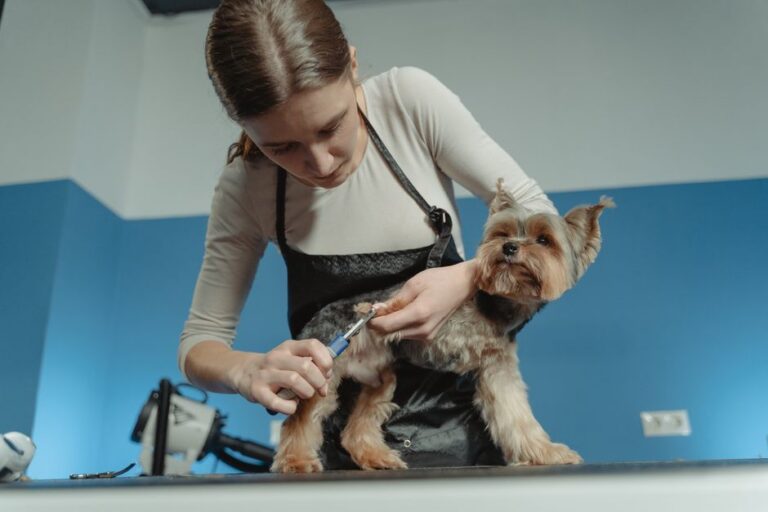
Nail trims: Cut only the tip and stop well before the pink quick. If you’re unsure, trim less than you think you need to. You can always go back for more; you can’t undo a nick.
Ear cleaning: Use a vet-approved solution on a cotton ball. Never push a cotton swab down into the canal. That’s how you cause damage instead of preventing it.
Clipper introduction: Turn the clippers on near your dog, away from his body, and reward him just for tolerating the sound. Do this across several sessions before the blade makes contact, and if you want to see the motion in practice, video tutorials can help make it click. This step matters most for dogs with a rough history.
A rescue dog who’s had bad handling in the past might need multiple short, treat-heavy sessions just to sit calmly while the clippers buzz nearby, let alone actually get clipped. That patience up front pays off every grooming session after, turning grooming from a stressful chore into genuine bonding time.
Clipper technique: Go with the direction of hair growth, and take a break the moment you see stress signals like lip licking, stiffening, or pulling away.
Grooming needs by coat type
Not every coat behaves the same way, and that’s exactly why “just brush him sometimes” isn’t a real strategy. Here’s what actually applies to your dog, by coat type:
| Coat type | Brushing frequency | Key tool | Common mistake |
|---|---|---|---|
| Short/smooth (Beagle, Boxer) | Weekly | Rubber curry brush | Skipping brushing since shedding seems minimal |
| Double coat (Husky, Golden Retriever) | 2-3 times weekly, daily during shedding season | Undercoat rake | Using only a slicker brush and missing the undercoat |
| Curly/wiry (Poodle, Terrier) | Every other day | Slicker brush plus metal comb | Letting mats form near ears and armpits |
| Long-haired (Shih Tzu, Collie) | Daily | Metal comb | Brushing only the surface, not down to the skin |
Notice the pattern: nearly every mistake on this list is “not brushing enough” or “using the wrong tool for the job.” Fix those two things and you’ll skip most of the problems that send people scrambling to a groomer for an emergency de-matting session.
What separates a beginner’s routine from a professional groomer’s approach?
Professionals aren’t running a different playbook. They’re running the same professional grooming techniques, just faster, with sharper tools and a lot more reps behind them. What actually separates a pro from a beginner is speed, tool quality, and the ability to read a dog’s body language before things go sideways.
Here’s the honest breakdown:
- Pros read body language faster. They adjust technique breed by breed almost automatically, but the core steps you just learned are identical to what they do.
- Better tools pay off with regular use. Sharper, breed-specific blades and brushes make sense once you’re grooming consistently, not for the one bath a month you’re currently doing.
- Reps build speed, not shortcuts. Beginners should prioritize calm and consistency over trying to move fast. Speed comes later. It’s not the goal right now.
- Know when to call it. If you hit mats you can’t work out, skin issues that look off, or a dog getting genuinely aggressive rather than just squirmy, that’s your cue to book a professional groomer instead of pushing through. There’s no medal for finishing a bad situation yourself.
Grooming issues are common enough that they show up regularly in veterinary care, with one review of veterinary service programs finding grooming-related concerns present in a meaningful share of cases across the board. That’s not a reason to panic. It’s a reason to stay consistent, because a lot of those concerns are the kind that regular brushing, bathing, and nail care can catch before they become emergencies.
Grooming isn’t just cosmetic, either. Dental and skin issues that get missed during regular care can connect to bigger health problems, which is part of why dogs with untreated gum disease showed a significantly higher likelihood of developing heart issues in one study. Grooming time is checkup time, whether you’re thinking of it that way or not.
The Bottom Line
Grooming your dog isn’t about nailing salon-perfect results on day one. It’s about building a routine your dog tolerates, then actually enjoys, one calm session at a time. Master the fundamentals here and you’ll save money, catch health issues early, and give your dog a lot fewer reasons to dread bath day.
Frequently Asked Questions
How often should I actually groom my dog at home?
Brushing needs vary by coat, but most dogs do well with a full grooming session (bath, nails, ears) every four to six weeks, with brushing in between. Watch your dog’s coat and activity level and adjust from there.
My dog hates the clippers. What am I doing wrong?
Probably nothing wrong, just too fast. Let the clippers run near your dog with treats flowing for several sessions before you ever touch blade to fur. Rushing this step is the number one reason dogs panic at grooming time.
Is it safe to shave a double-coated dog in hot weather?
No, and this is a myth worth killing. Double coats insulate against heat and sunburn, so shaving actually makes dogs more vulnerable, not less. Brush out the undercoat instead.
What if I accidentally cut the quick while trimming nails?
Keep styptic powder on hand. Press it to the nail for a few seconds and the bleeding stops fast. It looks scarier than it is, but it will teach you to trim more conservatively next time.
Can I use my own scissors or clippers instead of buying dog-specific ones?
Stick to dog clippers and blunt-tip grooming scissors. Human hair clippers overheat on thick coats and human scissors have sharp tips that are risky near a wiggling dog.

2 Comments