Transform Your Dog From Scruffy to Salon-Fresh at Home: Complete Guide
If you’ve ever watched a freshly groomed dog prance out of a professional salon and wondered how you could achieve those same results at home, you’re not alone. Dog grooming might seem intimidating to beginners, but with the right approach and techniques, you can transform your furry friend from scruffy to stunning in your own space. Not only will regular grooming keep your dog looking their best, but it’s also essential for their health, comfort, and overall well-being. Whether you’re dealing with a wiggly puppy or a patient senior dog, this comprehensive guide will walk you through every step of the grooming process, from gathering the right tools to mastering professional techniques that will have your pup looking salon-fresh.
Essential Dog Grooming Tools and Setup for Success
The difference between a frustrating grooming session and a successful one often comes down to having the right tools. Professional groomers rely on specific equipment for good reason—quality tools make the job safer, faster, and more comfortable for both you and your dog.
Must-Have Grooming Tools for Beginners
Start with these essential items: a slicker brush for most coat types, a metal comb for detail work, nail clippers (guillotine or scissor-type), dog-specific shampoo, absorbent towels, cotton balls for ear cleaning, and a non-slip mat for your bathing area. For dogs with longer coats, add a dematting comb and thinning shears to your toolkit.
Brush selection makes a dramatic difference in results. Short-haired breeds like Beagles need a rubber curry brush or bristle brush, while Golden Retrievers require a slicker brush followed by an undercoat rake. Poodles and Doodles benefit from a pin brush for daily maintenance and a slicker brush for thorough grooming sessions.
Creating a Safe and Comfortable Grooming Space
Transform your bathroom or laundry room into a grooming station by ensuring adequate lighting, ventilation, and easy cleanup. Place non-slip mats both inside and outside your tub or sink. Keep all tools within arm’s reach but out of your dog’s way. The space should feel calm and secure—avoid areas with loud noises or high foot traffic.
Choosing Products for Your Dog’s Needs
Never use human shampoo on dogs. Their skin has a different pH level, and human products can cause irritation and dryness. Dogs with sensitive skin need hypoallergenic formulas, while those with oily coats benefit from clarifying shampoos. Dry or itchy skin calls for moisturizing formulas with oatmeal or aloe vera.
Consider your dog’s specific needs: flea and tick shampoos for outdoor adventurers, whitening shampoos for light-colored coats, or medicated formulas for skin conditions. When in doubt, consult your veterinarian about the best products for your dog’s skin and coat type.
Pre-Grooming Preparation: Setting Your Dog Up for Success
Take time to properly prepare your dog before diving into the full grooming process. This preparation phase can make or break your grooming session, especially for nervous or first-time dogs.
Acclimating Your Dog to Grooming
Start handling exercises weeks before your first full grooming session. Touch your dog’s paws, ears, and mouth regularly during calm moments. Let them sniff and investigate grooming tools without using them. Positive associations are everything—offer treats and praise during these introduction sessions.
Maya, a nervous rescue Golden Retriever, initially trembled at the sight of a brush. Her owner spent two weeks simply showing Maya the brush during treat time, then gently touching her with it while feeding her favorite snacks. By the third week, Maya approached the brush willingly, tail wagging.
Pre-Grooming Health Check
Before starting any grooming procedure, examine your dog thoroughly. Check for cuts, lumps, rashes, or parasites. Look inside their ears for redness, discharge, or strong odors that might indicate infection. Examine their eyes for discharge or irritation. This inspection helps you spot potential health issues and avoid aggravating existing problems during grooming.
Brushing Out Mats and Loose Fur
Never bathe a matted dog. Water tightens mats, making them nearly impossible to remove and potentially requiring professional intervention. Work through mats systematically, starting from the ends of the hair and working toward the skin. Use a dematting spray to make the process easier and less uncomfortable.
For severely matted dogs, tackle small sections at a time over several days rather than attempting everything in one stressful session. Sometimes the kindest approach is having a professional groomer handle extensive matting.
Step-by-Step Bathing Process: From Wet to Squeaky Clean
Proper bathing technique prevents skin irritation while ensuring your dog gets thoroughly clean. The key lies in systematic preparation, gentle handling, and thorough rinsing.
Water Temperature and Pressure Guidelines
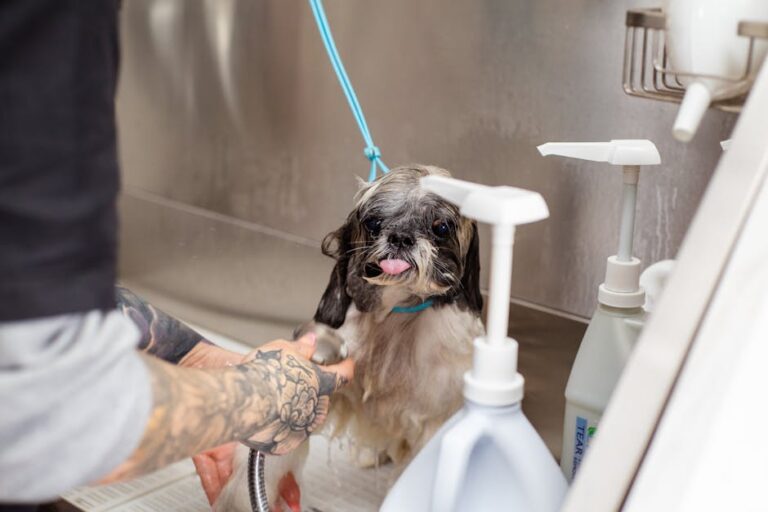
Use lukewarm water—test it on your wrist like you would for a baby’s bath. Water that’s too hot can burn sensitive skin, while cold water creates an unpleasant experience that makes future baths more difficult. Adjust water pressure to a gentle flow, especially around the face and ears.
Small dogs and puppies need extra attention to water temperature since they can become chilled quickly. Larger breeds can handle slightly cooler water, but err on the side of warmth for comfort.
Shampooing Technique and Application
Wet your dog thoroughly before applying any shampoo, paying special attention to dense areas like the chest and hindquarters where water doesn’t penetrate easily. Apply shampoo starting at the neck and working backward—this prevents fleas from fleeing to your dog’s head.
Work the shampoo into a lather using circular motions, but avoid scrubbing aggressively. Let the shampoo sit for the recommended time (usually 5-10 minutes) to allow active ingredients to work effectively.
Rinsing: The Most Critical Step
Inadequate rinsing causes more grooming problems than any other mistake. Soap residue leads to skin irritation, dullness, and faster re-soiling. Rinse until the water runs completely clear, then rinse for another two minutes.
One Golden Retriever owner learned this lesson the hard way when her dog developed itchy, flaky skin after home grooming. The culprit was leftover shampoo residue that wasn’t thoroughly rinsed from the dense undercoat. After adjusting her rinsing technique, the skin problems disappeared.
Effective Drying Methods
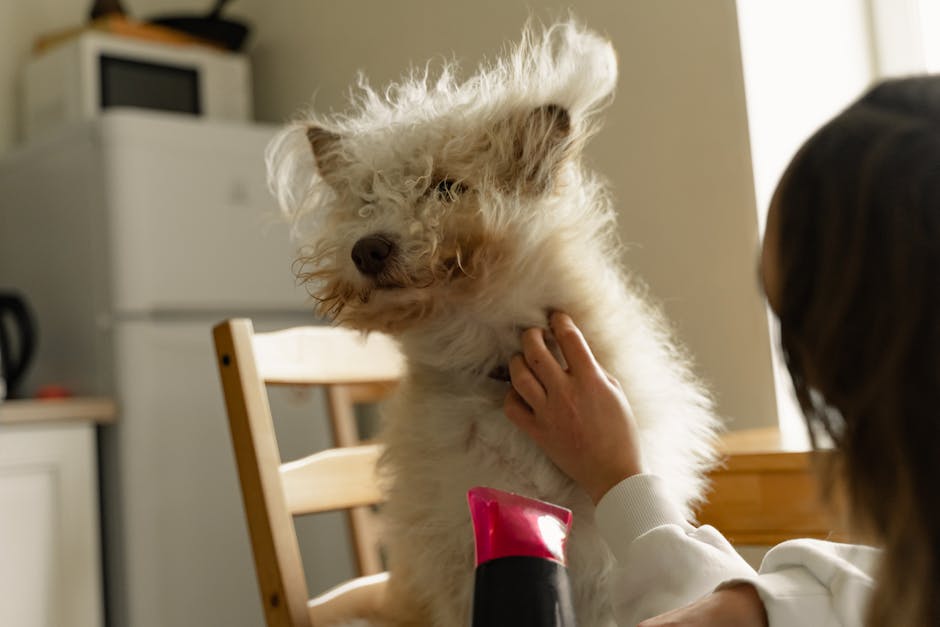
Towel dry immediately after bathing to prevent chilling and reduce overall drying time. Use absorbent microfiber towels, pressing rather than rubbing to avoid creating mats in wet fur. For dogs comfortable with noise, a blow dryer on cool setting speeds the process—maintain constant movement to avoid concentrating heat in one area.
Double-coated breeds like German Shepherds require thorough drying to prevent moisture from being trapped against the skin, which can lead to hot spots or fungal issues.
Professional Brushing and Coat Care Techniques
Mastering proper brushing techniques transforms both your dog’s appearance and coat health. Professional groomers follow systematic approaches that ensure every area gets attention while minimizing stress.
Systematic Brushing Approach
Always brush from head to tail in a methodical pattern. Start with the head and ears, move to the neck and chest, then work along the back, sides, and finally the legs and tail. This systematic approach ensures you don’t miss any areas and helps your dog predict what comes next.
Work in sections rather than random brushing. Part the coat and brush small areas thoroughly before moving on. This technique is especially important for long-haired breeds where surface brushing can miss underlying mats.
De-matting Techniques for Stubborn Tangles
When you encounter a mat, resist the urge to cut it out immediately. Hold the mat at the base near the skin to prevent pulling, then use a dematting comb to work through it gradually. Start from the outer edge of the mat and work inward, separating small sections at a time.
For particularly stubborn mats, apply a detangling spray and let it work for a few minutes before attempting removal. Sometimes the most humane approach is carefully cutting out severe mats, but always use blunt-tipped scissors and extreme caution around the skin.
A Poodle mix named Cooper arrived for his first home grooming session with extensive matting from months of neglect. His owner spent three patient sessions over a week, working for 15 minutes at a time with plenty of treats and breaks. By gradually removing mats in small sections, Cooper’s coat was restored without the stress of a complete shave-down.
Finishing Touches for Coat Health
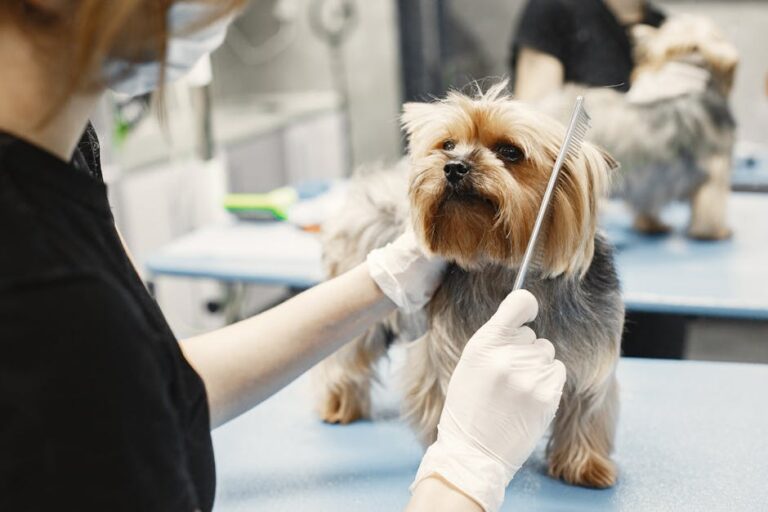
After thorough brushing, use a metal comb to check for any missed tangles or mats. The comb should glide smoothly through the entire coat. For dogs with dull coats, a finishing spray or coat conditioner can restore shine and manageability.
Final Touches: Nail Trimming, Ear Cleaning, and Styling
The details make the difference between a good grooming job and professional-quality results. These final steps also contribute significantly to your dog’s health and comfort.
Safe Nail Trimming Technique
Proper nail trimming prevents pain and injury while keeping your floors scratch-free. Identify the pink “quick” inside each nail—never cut into this area as it contains blood vessels and nerves. For dogs with dark nails where the quick isn’t visible, trim very small amounts at a time and watch for a small dark circle in the center of the nail, indicating you’re approaching the quick.
A professional groomer’s technique for handling squirmy dogs involves distraction with high-value treats and working quickly but calmly. For particularly difficult dogs, consider trimming just a few nails per day rather than attempting all four paws in one session.
Proper Ear Cleaning Methods
Use a veterinarian-approved ear cleaning solution and cotton balls—never cotton swabs, which can push debris deeper or damage the ear canal. Gently wipe only the areas you can see, and watch for signs of infection like strong odors, excessive discharge, or redness that extends deep into the ear.
Some dogs need weekly ear cleaning, while others rarely require attention. Dogs with floppy ears or those who swim frequently typically need more frequent cleaning to prevent moisture-related problems.
Basic Trimming and Maintenance
Trim hair around the paw pads to prevent matting and improve traction. Carefully trim any hair that hangs over the eyes, and consider tidying up the sanitary areas for cleanliness. Use blunt-tipped scissors and work slowly—you can always trim more, but you can’t put hair back.
Between professional grooming sessions, maintain your dog’s appearance with weekly brushing, monthly nail trims, and spot cleaning as needed. Regular maintenance makes full grooming sessions easier and keeps your dog comfortable and healthy.
The transformation from a scruffy, uncomfortable dog to a clean, well-groomed companion is one of the most rewarding aspects of dog ownership. With practice, patience, and the right techniques, you’ll develop the confidence to keep your furry friend looking and feeling their absolute best year-round.