Dog Obedience Training at Home: A Step-by-Step Plan That Actually Sticks
Your dog doesn’t need a fancy training facility to become the well-behaved companion you’ve always wanted—just consistency, the right techniques, and a plan that fits your daily life. Whether you’re working with a bouncy new puppy or an adult rescue with some rough edges, dog obedience training at home puts you in the driver’s seat, building trust and communication one short session at a time. And if you ever hit a wall, Pasadena-area owners have local resources ready to back up your at-home efforts. This guide walks you through exactly how to structure a home training routine that actually sticks, plus when it’s worth searching for dog behavior training classes near me to fill in the gaps.
Why Home-Based Obedience Training Works (When Done Right)
Training in your living room, kitchen, and backyard has a distinct advantage over a classroom: your dog has to learn to listen where they actually live. A dog who sits perfectly in a training center but ignores you at the front door hasn’t really learned “sit”—they’ve learned “sit, but only in that one room, for that one instructor.” Home training closes that gap from day one.
Short Sessions Beat Marathon Lessons
Dogs, especially puppies, have short attention spans. Three 5-to-10-minute sessions spread across the day—morning, afternoon, evening—consistently outperform a single hour-long weekly class for retention. Short bursts keep your dog engaged, prevent frustration on both ends of the leash, and let you capitalize on natural motivation, like training right before mealtime when your dog is food-focused and alert.
Debunking the “Professional-Only” Myth
A persistent myth is that obedience training requires a certified expert standing over your shoulder. In reality, most foundational commands—sit, stay, come, down, leave it—are entirely teachable by attentive owners using positive reinforcement. Professional trainers add tremendous value for complex behavioral issues (more on that below), but they aren’t a prerequisite for a well-mannered dog.
Setting Realistic Expectations
A high-energy Border Collie puppy will pick up cues faster than a stubborn Basset Hound or an adult rescue still decompressing from shelter life. Factor in breed tendencies, age, and prior experience when setting your timeline. A rescue dog with an unknown history might need extra weeks of trust-building before commands even start clicking—and that’s normal, not a failure.
Building Your At-Home Training Toolkit and Space
You don’t need an elaborate setup, but a few essentials make sessions dramatically more effective.
The Basics
- High-value treats: pea-sized, soft, and something your dog rarely gets otherwise (think small bits of chicken or freeze-dried liver, not the same kibble sitting in their bowl all day)
- A clicker or consistent marker word (like “yes!”) to mark the exact moment your dog does something right
- A 6-foot leash for controlled practice, plus a long line for recall work
- A designated training zone—a quiet corner of a room or a fenced section of yard with minimal foot traffic, noise, and other pets wandering through
Choosing Rewards That Actually Motivate
Not every dog is treat-driven. Some respond better to a favorite squeaky toy, a game of tug, or verbal praise paired with physical affection. Test a few reward types in the first week and pay attention to which one gets the fastest tail wag and quickest response.
Multi-Pet and Multi-Person Households
If you’ve got other pets or young kids in the house, keep initial sessions separate to avoid competing distractions. A second dog barking for attention or a toddler grabbing for treats will derail even the most food-motivated learner. Once your dog nails a command solo, gradually reintroduce the household chaos as a “real-world” test.
The Core Commands Every Dog Should Master at Home
Every reliable, well-mannered dog is built on five foundational commands. Teach them in this order for the smoothest progression.
Sit
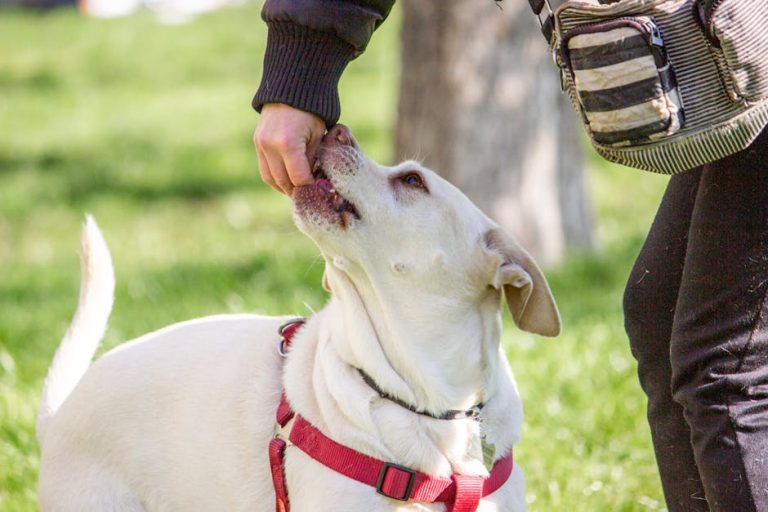
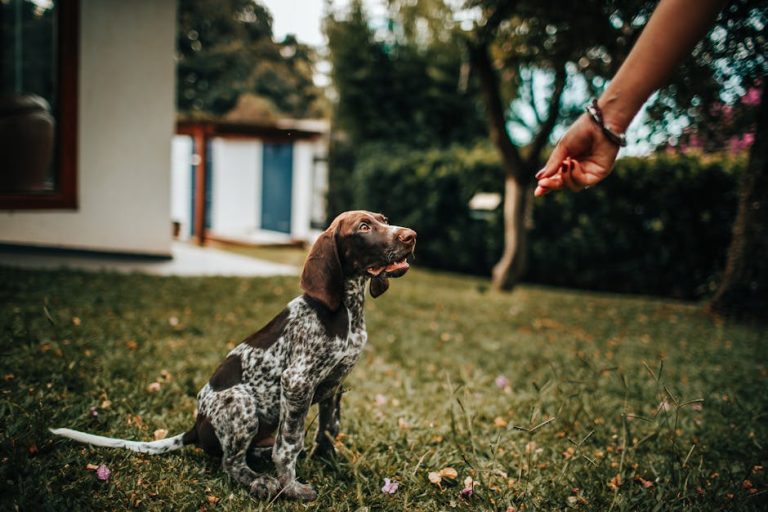
Hold a treat at your dog’s nose, then move it up and back over their head. As their bottom naturally lowers, say “sit” and mark the instant they’re down with your clicker or marker word, followed immediately by the treat.
Stay
Once sit is solid, ask for a sit, then take one small step back. If your dog holds position for even one second, mark and reward. Gradually increase distance and duration—this is where most owners rush and cause setbacks. Add time in small increments (2 seconds, then 5, then 10) rather than big jumps.
Come (Recall)
Start indoors with zero distractions. Crouch down, say your dog’s name plus “come” in an upbeat tone, and reward enthusiastically when they arrive. Never call your dog to punish them—this poisons the cue permanently.
Down
From a sit, lure your dog’s nose toward the floor with a treat, sliding it forward slightly to encourage their whole body to follow into a lying position. Mark the moment their belly touches the ground.
Leave It
Place a treat in your closed fist. Let your dog sniff and paw at it, and the instant they back off or look away, mark and reward with a different treat from your other hand. This teaches impulse control without frustrating them into giving up.
Troubleshooting Common Sticking Points
- Dog won’t hold a stay: You’re likely progressing too fast. Drop back to shorter durations and rebuild slowly.
- Ignores recall outdoors: Practice with a long line in a low-distraction yard before attempting off-leash recall anywhere with squirrels, other dogs, or traffic noise.
- Loses interest mid-session: Shorten sessions further and end on a win—always stop while your dog is still succeeding, not struggling.
From Living Room to Neighborhood
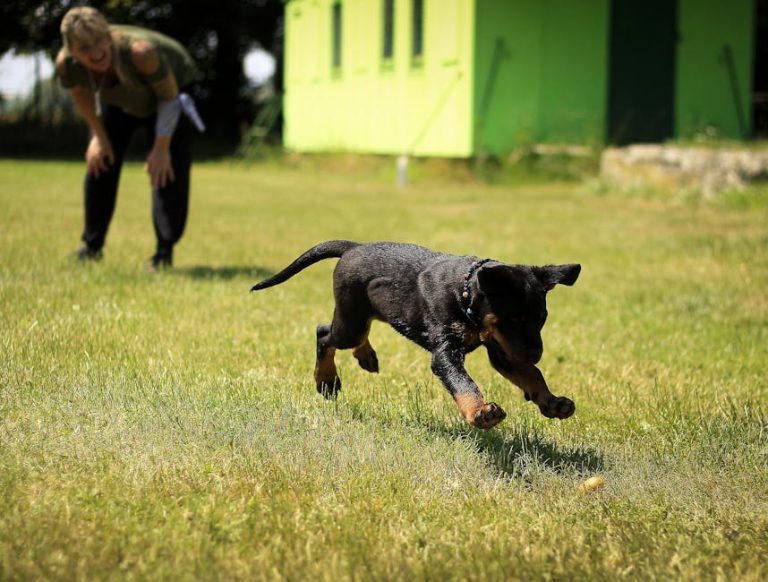
Once a command is reliable indoors with zero distractions, move to your backyard, then your driveway, then a quiet stretch of sidewalk. A Pasadena puppy owner might spend two weeks on 5-minute morning and evening sessions mastering sit, down, and come indoors—then graduate to practicing “come” at the Rose Bowl loop with mild distractions like joggers and other leashed dogs.
When to Bring in Reinforcements: Local Pasadena Resources
At-home training solves most obedience gaps, but certain behaviors call for professional eyes.
Signs You Need More Structured Support
- Leash reactivity (lunging, barking at other dogs or people)
- Severe separation anxiety or destructive behavior when left alone
- Any sign of aggression toward people, other animals, or resource guarding
- Recall that fails to improve after several weeks of consistent home practice
What to Look for in a Pasadena Program
When researching dog obedience training pasadena options, prioritize trainers certified through recognized organizations (CCPDT or KPA, for example) who use positive reinforcement rather than outdated dominance-based methods. Ask whether they offer group classes, private sessions, or both—group settings are excellent for socialization and distraction training, while private sessions work better for reactivity or anxiety cases that need individualized pacing.
Blending Home Practice with Classes
The fastest results come from combining both. Consider an adopted adult rescue with leash reactivity: weeks of at-home desensitization—starting with distant triggers and rewarding calm behavior—can prepare the dog to graduate into a local group class with far less stress than starting cold. Similarly, if you’ve searched dog behavior training classes near me after your recall training plateaus, pairing weekly classes with daily 10-minute home drills typically breaks through faster than either approach alone.
Questions to Ask Before Booking
- What certification and methodology do you use?
- Can I observe a class before enrolling?
- How do you handle dogs with reactivity or fear-based behaviors?
- What homework will I do between sessions?
Staying Consistent: Turning Training Into a Lifelong Habit
Training isn’t a two-week sprint—it’s an ongoing conversation with your dog that lasts their whole life.
Create a Household Rulebook
Inconsistent cues are one of the most common (and preventable) training killers. If one family member says “down” to mean lie down and another uses it to mean get off the couch, your dog gets mixed signals and progress stalls. Write out your exact commands, hand signals, and rules (no jumping on the couch, no begging at the table) and post them on the fridge so every household member reinforces the same standards.
Track Progress
A simple training log—even a note on your phone—helps you spot patterns: which commands are solid, which need more reps, and which environments cause regressions. Check off small daily wins to stay motivated.
Prevent Regression with Refreshers
Once a command feels “mastered,” don’t abandon it. Dogs lose sharpness without maintenance. Weave 2-minute refresher drills into daily walks or before meals to keep skills fresh for years, not just weeks.
Celebrate the Small Wins
Progress in dog training rarely looks like a straight line. Celebrate the first time your dog holds a stay for 10 full seconds or comes running past a distraction. Those small victories build the momentum—for both of you—that turns scattered training sessions into a genuinely well-behaved, happy dog.