7 Dog Training Tips for Beginners That Stop Bad Behavior Fast
Starting your dog training journey can feel overwhelming—especially when your new pup is chewing your favorite shoes, pulling on the leash like they’re training for a sled race, or giving you those innocent eyes after leaving a “surprise” on your carpet. But here’s the truth: successful dog training isn’t about being the perfect trainer or having years of experience—it’s about applying proven dog training techniques that actually work. It’s about understanding a few fundamental principles and applying them consistently. Whether you just brought home an 8-week-old puppy or adopted an adult dog who needs some guidance, these proven training tips will help you build a strong foundation for a well-behaved, happy companion—and if you’re looking for a more structured approach, our 8-week dog training plan provides a complete roadmap. Let’s transform those chaotic moments into confident training wins.
Essential Foundation: Understanding Your Dog’s Learning Style
Before diving into specific commands, you need to understand how your dog actually processes information. Modern dog training tips for beginners start with one crucial principle: dogs learn best through positive reinforcement, not fear or intimidation.
How Dogs Learn Through Positive Reinforcement
Your dog’s brain is wired to repeat behaviors that result in good things happening. When you reward a behavior within seconds of it occurring, you’re literally strengthening the neural pathways that create that behavior. This means treats, praise, or play immediately after your dog sits will make sitting more likely in the future.
Punishment-based methods, on the other hand, might stop a behavior temporarily, but they often create anxiety, confusion, and even aggression. A dog who’s been yelled at for jumping might stop jumping on you, but start jumping on guests instead—or develop entirely new problem behaviors.
Reading Your Dog’s Body Language During Training
Dog health advice often emphasizes stress management, and training is no exception. Watch for these signs that your dog is overwhelmed:
- Excessive panting when it’s not hot
- Yawning repeatedly during training
- Lip licking without food present
- Looking away or avoiding eye contact
- Frozen posture or refusing to move
When you see these signals, it’s time to take a break, lower your expectations, or change your approach entirely.
The 3-Second Rule for Training Success
Timing is everything in dog training. You have roughly three seconds after a behavior occurs to make it clear whether that behavior was good or bad. Miss this window, and your dog won’t connect your response to their action.
Age-Appropriate Expectations
A 12-week-old Golden Retriever puppy has the attention span of about 5-10 minutes for focused training, while an adult dog might handle 15-20 minute sessions. Puppies under 16 weeks are still developing bladder control, so expecting perfect house training isn’t realistic. Adult rescue dogs might know commands but need time to trust you enough to follow them consistently.
The Big Three: Master These Commands First
These three commands form the foundation of everything else your dog will learn. Master these, and you’ll have the building blocks for addressing almost any behavioral issue.
Sit: Your Gateway Command
Sit is the perfect starting point because it’s natural for dogs and builds the focus you need for more complex training.
Step-by-step progression:
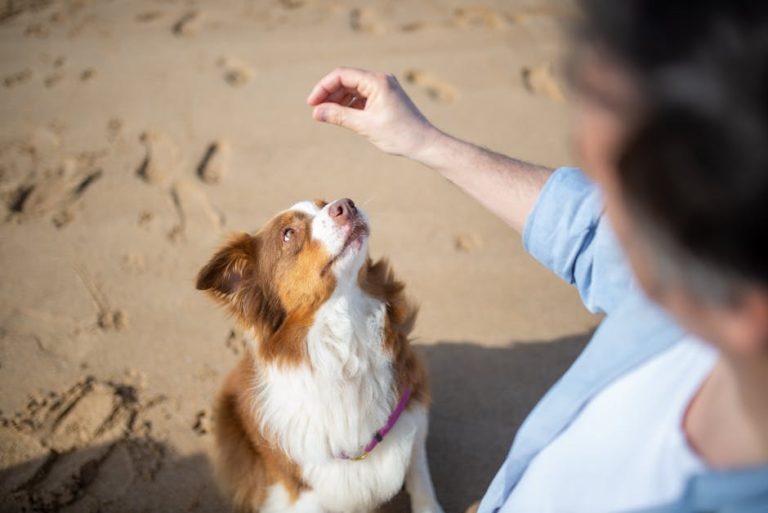
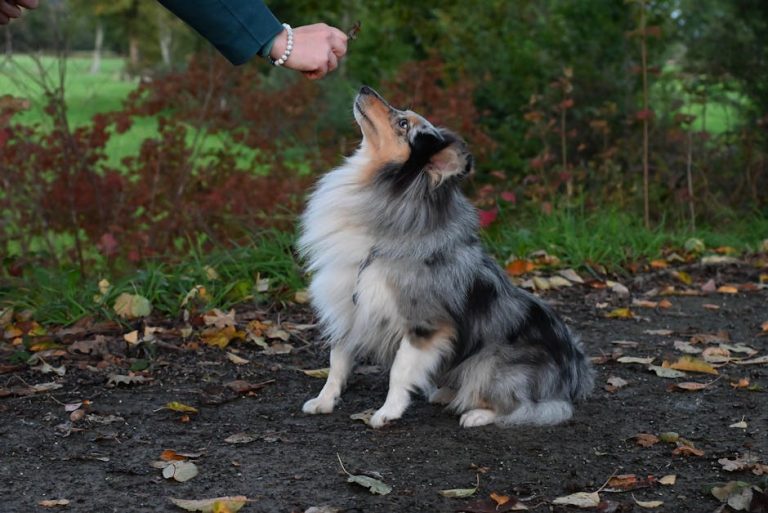
- Hold a treat close to your dog’s nose
- Slowly lift the treat over their head—their bottom should naturally touch the ground
- The instant their rear hits the floor, say “Yes!” and give the treat
- Practice 5-10 repetitions, 2-3 times daily
- Add the word “Sit” just before lifting the treat
- Gradually phase out the treat lure, using just the hand motion
- Eventually eliminate the hand motion, using only the verbal command
Stay: Teaching Self-Control
Stay transforms your impulsive pup into a dog who can wait patiently for permission.
Progressive training approach:
- Start with your dog in a sit position
- Hold your palm up in a “stop” gesture and take one small step back
- Wait 2 seconds, then step forward and reward
- Gradually increase duration (3 seconds, 5 seconds, 10 seconds)
- Once duration is solid, work on distance
- Finally, add distractions like toys or food on the ground
Come: The Life-Saving Recall
A reliable recall can literally save your dog’s life, making this one of the most important dog trainer tips you’ll ever learn.
Building bulletproof recall:
- Start indoors with no distractions
- Get down to your dog’s level and use an excited, happy voice
- When they come to you, make it the best thing ever—treats, praise, play
- Never call your dog to come for something they perceive as negative (bath time, end of play)
- Practice in gradually more challenging environments
- Use a long training leash (15-30 feet) in unfenced areas while building reliability
Common Training Mistakes That Sabotage Your Progress
Even well-meaning dog owners make these critical errors that can set back training by weeks or months.
Inconsistent Rules Between Family Members
Your dog can’t understand why jumping on Dad is okay but jumping on Mom results in a correction. Hold a family meeting to establish consistent rules: who gives commands, which words you’ll use, and what behaviors are acceptable from everyone.
Training Sessions That Are Too Long or Infrequent
Most dog training tips for beginners get this wrong. Better to do five 3-minute training sessions throughout the day than one 30-minute marathon that leaves everyone frustrated. Dogs learn through repetition over time, not cramming.
Using Treats Incorrectly
Treats should be tiny (pea-sized), high-value (think chicken or cheese, not regular kibble), and given immediately after the correct behavior. Start phasing out treats once your dog performs a command reliably 8 out of 10 times, replacing food rewards with praise, petting, or life rewards like going outside.
Punishment Timing Errors
Finding chewed shoes an hour after the fact and scolding your dog teaches them that your return home is unpredictable and scary—not that chewing shoes is wrong. Dogs live in the moment; they can only learn from immediate consequences.
Creating a Training Schedule That Actually Works
The most effective training happens when it’s woven into your daily routine rather than treated as a separate activity.
Daily Training Structure for Busy Owners
Morning (5 minutes):
- Practice “sit” and “stay” before putting down the food bowl
- Work on “come” when calling your dog in from the backyard
Midday (3 minutes):
- Quick “sit” and “shake” session during your lunch break
- Practice “stay” while you prepare their midday treat
Evening (10 minutes):
- Longer training session working on problem areas
- End with a fun trick or command your dog loves
Bedtime (2 minutes):
- Calm “place” or “settle” command before bed
- Gentle handling practice (touching paws, ears, mouth)
Incorporating Training Into Everyday Activities
Transform routine moments into training opportunities:
- Doorways: Require a “sit” before going through doors
- Car rides: Practice “stay” before jumping into the car
- Mealtime: Use kibble as training treats throughout the day
- Walk time: Turn every walk into leash training practice
Progress Tracking Methods
Keep a simple log on your phone noting:
- Commands practiced
- Success rate (how many times out of 10 your dog responded correctly)
- Distractions present
- Your dog’s energy/mood level
This data helps you identify patterns and adjust your approach before small issues become big problems.
Troubleshooting: When Training Isn’t Going as Planned
Sometimes training stalls despite your best efforts. Here’s how to diagnose and fix common roadblocks.
Health Issues Affecting Learning
Dog health tips remind us that pain, illness, or discomfort can dramatically impact training success. If your previously responsive dog suddenly stops following commands, rule out:
- Hearing problems (especially in older dogs)
- Vision changes that make hand signals difficult to see
- Joint pain that makes sitting or lying down uncomfortable
- Cognitive changes in senior dogs
Schedule a vet checkup if you notice sudden behavioral changes alongside training regression.
Environmental Distractions and Gradual Challenge Increase
A dog who performs perfectly in your quiet living room might act like they’ve never heard the word “sit” at the bustling dog park. This is normal—dogs don’t generalize well.
Systematic distraction training:
- Level 1: Quiet room, no distractions
- Level 2: Same room with family members present
- Level 3: Different rooms in your house
- Level 4: Backyard with mild distractions
- Level 5: Front yard with cars and pedestrians
- Level 6: Dog park or high-distraction environment
Only move to the next level when your dog responds correctly 8 out of 10 times at the current level.
When to Seek Professional Help
Consider professional training if:
- Your dog shows aggression (growling, snapping, biting)
- Fear-based behaviors aren’t improving with gradual exposure
- You’re feeling consistently frustrated or overwhelmed
- Safety issues like poor recall around traffic aren’t resolving
A qualified positive-reinforcement trainer can identify issues you might miss and provide customized solutions for your specific situation.
Adapting Techniques for Different Personality Types
For anxious dogs: Use softer voice tones, allow more processing time, and reward smaller steps toward the goal behavior.
For hyperactive dogs: Burn off excess energy before training sessions, use higher-value treats, and keep sessions shorter but more frequent.
For stubborn dogs: Find what truly motivates them (it might be play, not food), make training feel like their idea, and be patient with slower progress.
Take the case of Max, a 2-year-old rescue German Shepherd who knew basic commands but wouldn’t perform them for his new family. The issue wasn’t lack of knowledge—it was lack of trust. His owners spent two weeks simply hand-feeding him meals and playing together before attempting any formal training. Once Max felt secure, his obedience improved dramatically within days.
Remember, every dog learns differently and at their own pace. Stay consistent, remain patient, and celebrate small victories. With these foundational dog training tips for beginners, you’re well-equipped to build the strong, positive relationship with your dog that makes all future training possible.