How to Choose the Best Puppy Food for Your Golden Retriever’s Needs
Choosing the right puppy food can feel overwhelming when you’re staring at endless rows of colorful bags at the pet store, each promising to be the “best” for your growing pup. But here’s the truth: the best puppy food isn’t the same for every dog. Your Golden Retriever puppy has different nutritional needs than a French Bulldog, and a pup with a sensitive stomach requires an entirely different approach. As a dog nutrition expert who’s helped thousands of owners navigate this crucial decision, I’ll walk you through exactly how to choose puppy food that sets your furry friend up for a lifetime of health and happiness.
Understanding Your Puppy’s Unique Nutritional Needs
How breed size affects calorie and nutrient requirements
The most critical factor in selecting puppy food isn’t brand marketing or flashy packaging—it’s understanding that your puppy’s size at maturity dictates their nutritional requirements. Large breed puppies like Golden Retrievers need controlled growth, while small breed puppies like French Bulldogs require concentrated nutrition to fuel their rapid development.
Large breed puppies (those expected to weigh over 70 pounds as adults) have a longer growth period, typically reaching maturity between 18-24 months. Their bones and joints develop gradually, making controlled calcium and phosphorus levels essential. Small breed puppies, on the other hand, reach adult size by 10-12 months and burn calories at an incredible rate, requiring energy-dense formulations.
The critical role of DHA for brain and eye development
During the first year of life, puppies experience explosive brain and eye development. Docosahexaenoic acid (DHA), an omega-3 fatty acid found naturally in fish oil, plays a crucial role in this process. Look for puppy foods that specifically list DHA content on the guaranteed analysis—quality formulas should contain at least 0.05% DHA on a dry matter basis.
Protein and fat ratios that support healthy growth
Puppies require significantly more protein and fat than adult dogs. The minimum protein requirement for puppy food is 22.5% on a dry matter basis, but premium formulas often exceed 26%. Fat content should range between 8-15%, with small breed puppies benefiting from the higher end of this range due to their accelerated metabolisms.
Why generic ‘puppy food’ isn’t always the answer
Generic puppy foods that claim to be suitable for “all breeds” often fall short because they can’t address the specific physiological differences between breed sizes. A one-size-fits-all approach may provide adequate nutrition for survival, but optimal nutrition requires targeted formulations.
Best Puppy Food for Golden Retrievers: Large Breed Considerations
Controlled calcium and phosphorus for proper bone development
Golden Retrievers are particularly susceptible to developmental orthopedic diseases, including hip and elbow dysplasia. Excessive calcium during puppyhood can actually accelerate bone growth in an unhealthy way, leading to malformed joints and lifelong mobility issues.
The best puppy food for Golden Retrievers should contain calcium levels between 1.2-1.8% and phosphorus between 1.0-1.6% on a dry matter basis. The calcium-to-phosphorus ratio should remain close to 1.2:1 for optimal absorption.
I once worked with a Golden Retriever owner whose 8-month-old puppy, Max, began showing signs of hip discomfort. After reviewing his diet, we discovered he’d been eating a regular puppy food with 2.5% calcium—well above safe levels for large breeds. Within three months of switching to an appropriate large breed formula, Max’s mobility improved dramatically, and subsequent X-rays showed better joint development.
Preventing developmental orthopedic diseases through nutrition
Beyond calcium control, large breed puppy formulas should provide adequate but not excessive calories. Overfeeding leads to rapid weight gain, putting additional stress on developing joints. Quality large breed puppy foods are formulated to provide approximately 350-400 calories per cup, compared to 450-500+ calories in small breed formulas.
Top ingredient profiles that support Golden Retriever health
Golden Retrievers thrive on formulas featuring:
- High-quality animal protein sources like deboned chicken, fish meal, or lamb meal as the first ingredient
- Complex carbohydrates such as brown rice, sweet potatoes, or oatmeal for sustained energy
- Natural sources of glucosamine and chondroitin from chicken meal or fish meal to support joint health
- Antioxidants from fruits and vegetables to support immune system development
Feeding schedule recommendations for large breed puppies
Large breed puppies should eat three meals daily until 6 months old, then transition to twice daily feeding. This schedule prevents gorging and supports steady, controlled growth. Free-feeding is never recommended for large breed puppies, as it makes portion control impossible.
French Bulldog Puppy Food: Small Breed Special Requirements
Higher calorie density for fast metabolisms
French Bulldog puppies are metabolic powerhouses, requiring nearly twice the calories per pound of body weight compared to large breed puppies. The best puppy food for French Bulldog puppies provides 450-500 calories per cup, with protein levels often reaching 28-30%.
Kibble size and shape considerations for flat-faced breeds
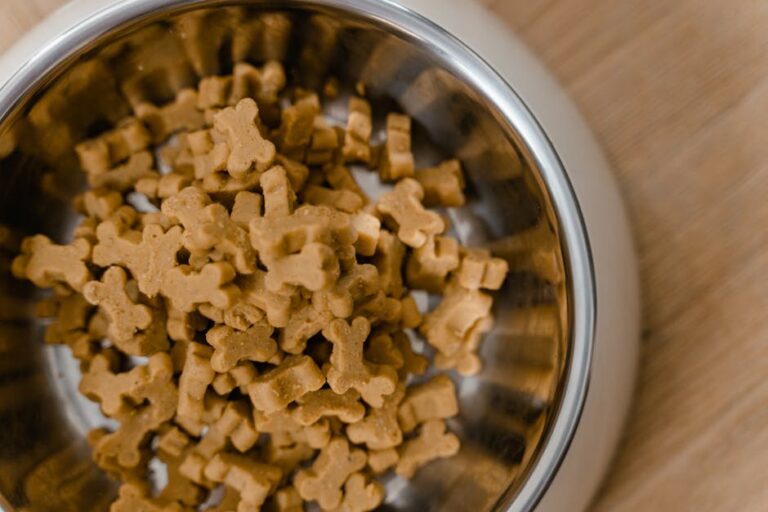
French Bulldogs’ brachycephalic (flat-faced) structure creates unique feeding challenges. They benefit from smaller, uniquely-shaped kibble that’s easier to pick up and chew. Some manufacturers design specific kibble shapes that accommodate shortened muzzles and help reduce gulping, which can lead to digestive upset and bloating.
Supporting respiratory health through proper weight management
Excess weight severely impacts breathing in flat-faced breeds. While French Bulldog puppies need calorie-dense food, portion control remains critical. Quality small breed puppy foods provide concentrated nutrition in smaller serving sizes, helping maintain optimal body condition.
Addressing common French Bulldog food sensitivities
French Bulldogs frequently develop sensitivities to common ingredients like chicken, beef, or wheat. A French Bulldog puppy I worked with named Luna experienced chronic digestive upset and skin irritation until her owner switched to a limited ingredient small breed formula featuring duck and sweet potato. Within six weeks, Luna’s symptoms resolved completely, and she maintained steady, healthy growth.
Managing Sensitive Stomachs: Gentle Nutrition Solutions
Identifying common food allergens and irritants
The best puppy food for sensitive stomachs avoids the most common culprits: chicken (the most frequent allergen), beef, dairy, wheat, and artificial preservatives. Symptoms of food sensitivity include loose stools, excessive gas, vomiting, skin irritation, and chronic ear infections.
Limited ingredient diets vs. novel protein sources
Two approaches work well for sensitive puppies:
Limited ingredient diets contain fewer than 10 total ingredients, making it easier to identify triggers. These formulas typically feature one protein source and one or two carbohydrate sources.
Novel protein diets use proteins your puppy hasn’t encountered before, such as venison, duck, fish, or even insect protein. Since food allergies develop through repeated exposure, novel proteins are less likely to cause reactions.
The role of prebiotics and probiotics in digestive health
Sensitive puppies benefit enormously from formulas containing prebiotics (fiber that feeds beneficial gut bacteria) and probiotics (live beneficial bacteria). Look for ingredients like chicory root, dried fermentation products from Lactobacillus or Bifidobacterium species.
Transitioning strategies for sensitive puppies
Sensitive puppies require slower transitions—sometimes taking 10-14 days instead of the standard 7-day protocol. Start with 90% old food and 10% new food for the first 2-3 days, then gradually increase the new food percentage every 2-3 days.
How to Choose and Transition to New Puppy Food
Reading ingredient labels like a pro
Ingredients are listed by weight before processing, so the first five ingredients matter most. Here’s what to look for:
- Named meat or meat meal as the first ingredient (chicken, salmon meal, lamb meal)
- Recognizable carbohydrate sources (brown rice, sweet potato, peas)
- Natural fat sources (chicken fat, fish oil)
- No generic terms like “meat meal,” “poultry meal,” or “animal fat”
- Minimal artificial preservatives—natural preservatives like mixed tocopherols are preferable
AAFCO guidelines and what they really mean
The Association of American Feed Control Officials (AAFCO) provides nutritional standards for pet foods. Look for statements like “formulated to meet AAFCO nutrient profiles for growth” or better yet, “feeding trials using AAFCO procedures substantiate that this food provides complete and balanced nutrition for growth.”
Feeding trial statements indicate the food was actually tested on puppies, not just formulated to meet minimum requirements on paper.
The 7-day transition method that prevents upset stomachs
Days 1-2: 75% old food, 25% new food
Days 3-4: 50% old food, 50% new food
Days 5-6: 25% old food, 75% new food
Day 7: 100% new food
Monitor your puppy’s stool consistency throughout the transition, and if your puppy stops eating entirely, consider specialized liquid nutrition options. If loose stools develop, slow the transition process and consider adding a probiotic supplement.
Red flags to avoid in puppy food formulations
Avoid foods containing:
- Excessive calcium (over 2.0% for large breeds, over 2.5% for small breeds)
- Generic meat sources (meat meal, poultry meal)
- Artificial colors (completely unnecessary for puppies)
- Excessive grain content (corn, wheat, or soy as primary ingredients)
- No specific life stage statement (should specifically say “for growth” or “for puppies”)
The foundation of your puppy’s adult health begins with their first bowl of food. Take time to understand your specific puppy’s needs, read labels carefully, and don’t hesitate to consult with your veterinarian about the best nutritional approach that earns veterinary recommendations. Your puppy’s future self will thank you for the investment in quality nutrition during these crucial developmental months.